An official website of the United States government





The 2026 ARM Summer School: Big Open Data Science
Published: 3 August 2026
Editor’s note: ARM Workforce Development Coordinators Scott Collis and Joe O’Brien provided the following blog post.
It was big, and it was open! In May 2026, 28 students traveled to Oklahoma for the ARM Big Open Data Science Summer School. The school was open to competitive applications from advanced undergraduates (juniors and seniors) to very early career postdocs, and applicants were challenged to show how attending would impact their careers and how their learning would further the ARM mission.
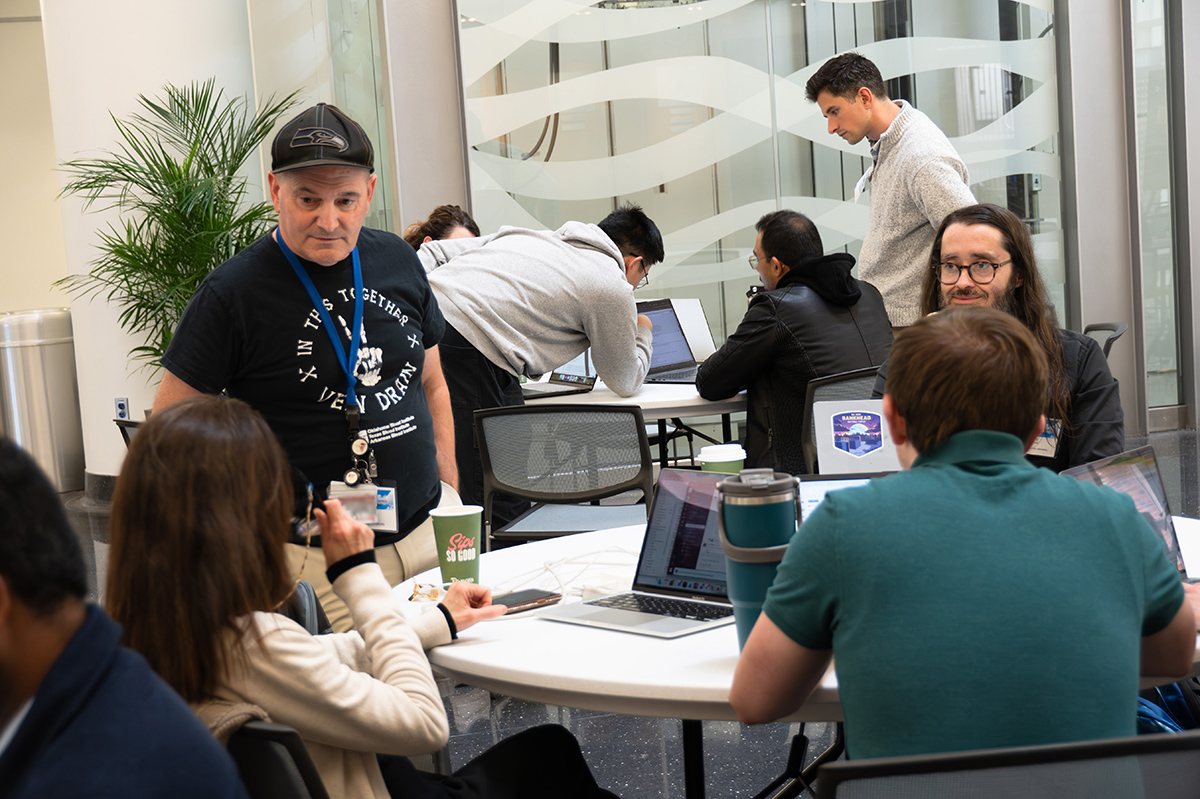
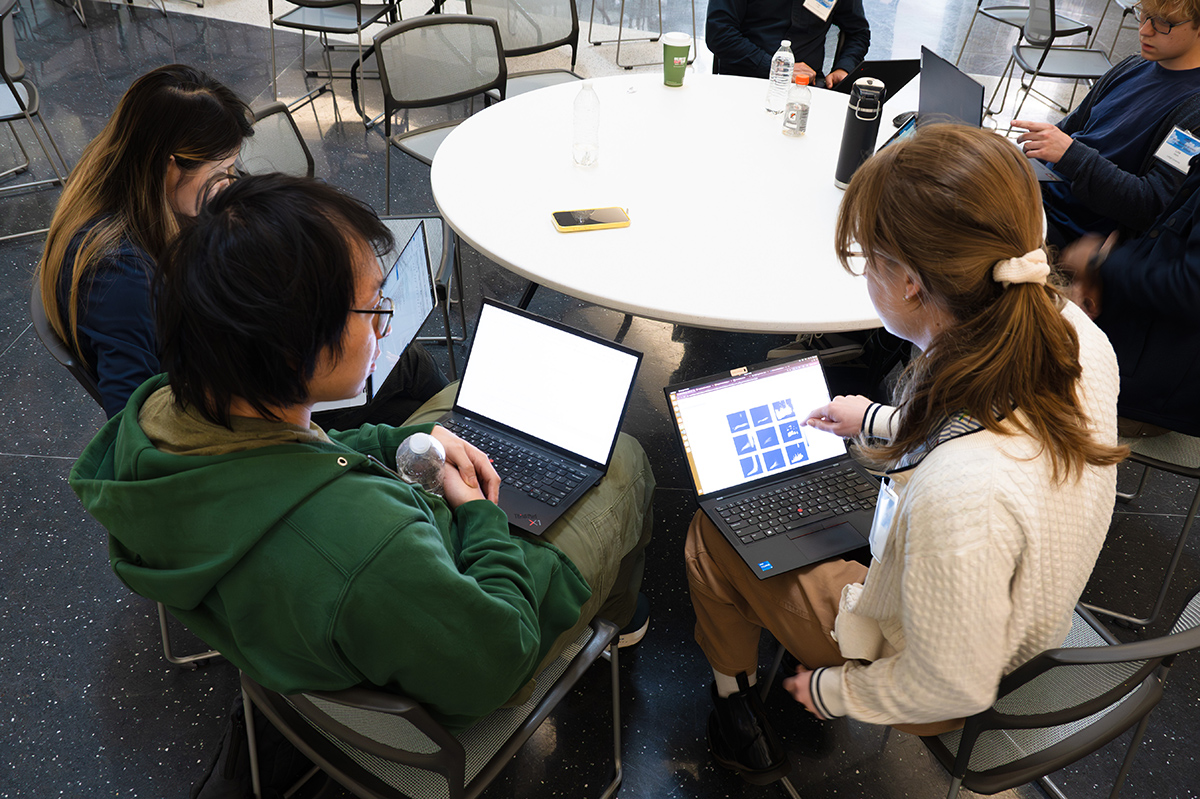
Held at the National Weather Center with the support of the Cooperative Institute for Severe and High-Impact Weather Research and Operations (CIWRO), the school was a mix of presentations from ARM users and staff and Atmospheric System Research (ASR) scientists and a hands-on hackathon. The hackathon involved students getting their hands dirty with ARM data and producing Project Pythia-style cookbooks. Learning by doing! The students also enjoyed a trip to ARM’s flagship Southern Great Plains atmospheric observatory, where they got to see the instrumentation that produces the data they would be investigating.
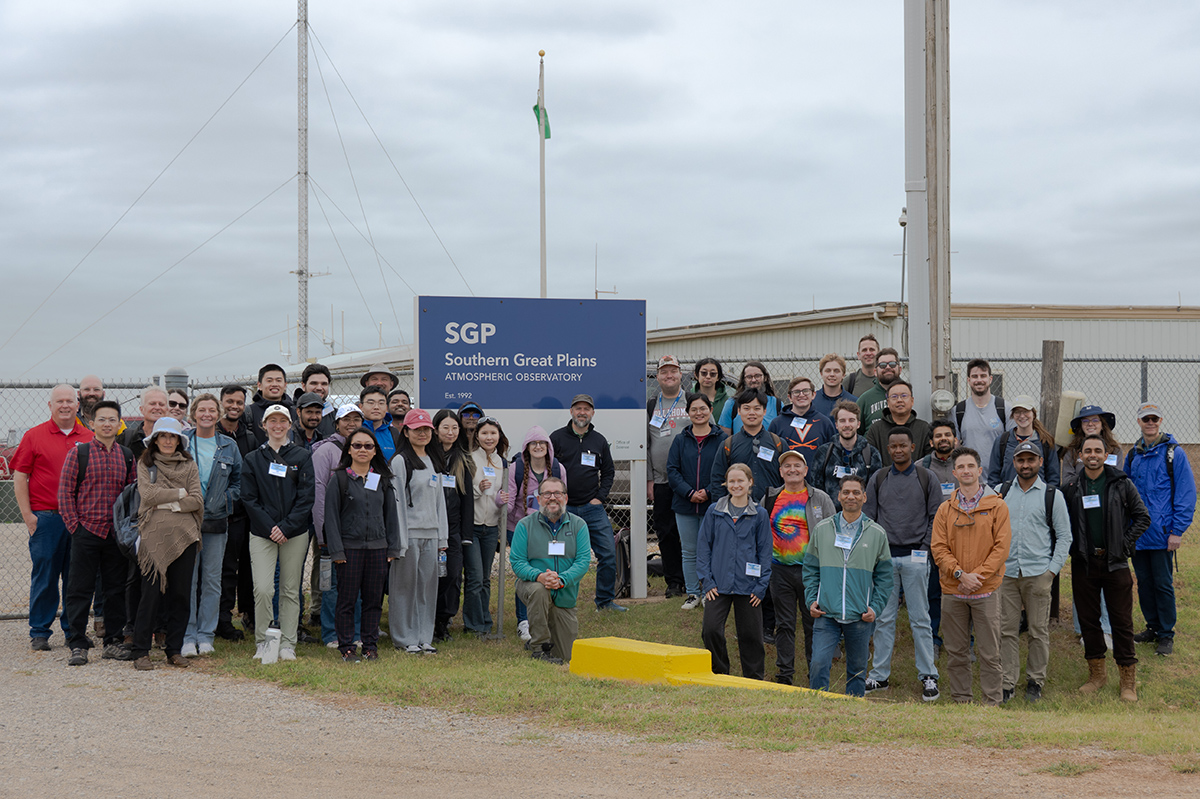
The students split up into six groups based on their interests and were partnered with ARM staff and users mentoring them on projects that had to either use artificial intelligence (AI) to gain insight into ARM data, work with multiscale modeling data, or analyze at least 10 years of ARM data. In the end, ALL projects opted to investigate the use of AI!
Project summaries follow below with their GitHub repository links and citable Digital Object Identifiers (DOIs).
ARMS-Race: teaching a computer to read arctic clouds
GitHub repository: https://github.com/ARM-Synergy/arms-race, doi:10.5281/zenodo.20820989
Clouds in the Arctic are often mixed-phase—liquid water and ice coexisting in the same cloud—and that mix has an outsized effect on how much energy clouds in the Arctic reflect back out into space or trap beneath them. Telling liquid from ice using ground-based instruments is a classic hard problem. The ARMS-Race team (short for Atmospheric Radiation Measurement Synergy: Radar, Aerosol, Cloud, and Energy) trained a random forest machine learning model to classify cloud phase using data from ARM’s North Slope of Alaska observatory, combining several instruments so the computer could learn what scientists usually judge by eye.
Team: Katie Chan, Amanda Cresanti, Aaron Dorough, Lin Lin, Christian Nairy, Taylor Rinke, Suryadev Singh, and Vera Zhang, mentored by Andrew Dzambo and Joe O’Brien.
Model Meets Reality: a friendly duel between two weather models
GitHub repository: https://github.com/ARM-Synergy/model-meets-reality, doi:10.5281/zenodo.21113437
Computer models of the atmosphere are only as good as their agreement with reality. This team staged a head-to-head comparison between the established Weather Research and Forecasting (WRF) model, which was used to generate the Large-Eddy Simulation (LES) ARM Symbiotic Simulation and Observation (LASSO) product, and the newer Doubly Periodic Simple Cloud-Resolving E3SM (Energy Exascale Earth System Model) Atmosphere Model (DP-SCREAM). Team members checked both models against ARM’s real-world observations across three days of weather. The goal was to see how differences in resolution and physics change the way each model represents clouds—and to let the observations be the referee. The team also used a random forest machine learning model to investigate the relationships between the biases between the models and atmospheric humidity.
Team: Pappu Paul, Luojie (Roger) Dong, Emmanuel Kipchirchir, Luke Heim, Sining Niu, Yijia Sun, Maggie Powell, Lucia Liu, and Jing Li, mentored by William Gustafson and Hsi-Yen Ma.
Total Smokeshow: predicting the seeds of clouds
GitHub repository: https://github.com/ARM-Synergy/total_smokeshow, doi:10.5281/zenodo.21086751
Every cloud droplet needs a speck of aerosol to form on—a cloud condensation nucleus. Measuring these directly is difficult, but measuring other aerosol properties is easier. The Total Smokeshow team built an explainable XGBoost machine learning model to predict cloud condensation nuclei from more routine aerosol measurements. The “explainable” part was the point: Rather than trusting a black box, the team used interpretability tools to check whether the model had actually learned the underlying physics.
Team: Abhigyan Chakraborty, Ajinkya Desai, Benjamin Marosites, and William Zhai, mentored by Maria Zawadowicz.
AIM-SGP: spotting new particles as they are born
GitHub repository: https://github.com/ARM-Synergy/ai-new-particle-formation, doi:10.5281/zenodo.20938984
Sometimes the atmosphere makes brand-new aerosol particles out of gas-phase molecules, constituting a new particle formation event. On the right kind of plot, it leaves a distinctive banana-shaped curve. Traditionally, a scientist scrolls through data to find these events by hand. The AIM-SGP team (Aerosol event Identification using Machine learning at the Southern Great Plains) trained a random forest model to flag these events automatically, day by day.
Team: Gerardo Carrillo-Cardenas, Ashlynne Gary, and Rory Zhang, mentored by Connor Flynn.
N-Dimensional Lidar Clustering: letting the data sort themselves
GitHub repository: https://github.com/ARM-Synergy/ndim-auto-cluster-lidar, doi:10.5281/zenodo.20936643
A high-spectral-resolution lidar paints a rich picture of aerosols and clouds overhead, but interpreting it often comes down to expert judgment. This project asked a different question: If you let an unsupervised clustering algorithm loose on the measurements, do natural groupings emerge on their own, and do they line up with the aerosol types scientists already recognize? If they do, the same approach could extend research-grade insight to cheaper instruments at sites that cannot afford top-tier hardware.
Team: Zohaer Al Mahatab, mentored by Connor Flynn.
Race to the Bottom: squeezing more out of a water vapor sensor
GitHub repository: https://github.com/ARM-Synergy/race-2-the-bottom, doi:10.5281/zenodo.20934920
Microwave radiometers measure water vapor in the atmosphere, but they struggle at the very dry, low end of the range. Water vapor also leaves a fingerprint in sunlight, dimming the direct solar beam near a particular wavelength. This team built a neural network with a memory component (also known as a long short-term memory [LSTM] network) that combines microwave and solar measurements to extend the water vapor retrieval down into that hard-to-reach dry regime.
Team: Jeremy Corner and Quintin Ashley, mentored by Maria Cadeddu and Connor Flynn.
Wrapping Up
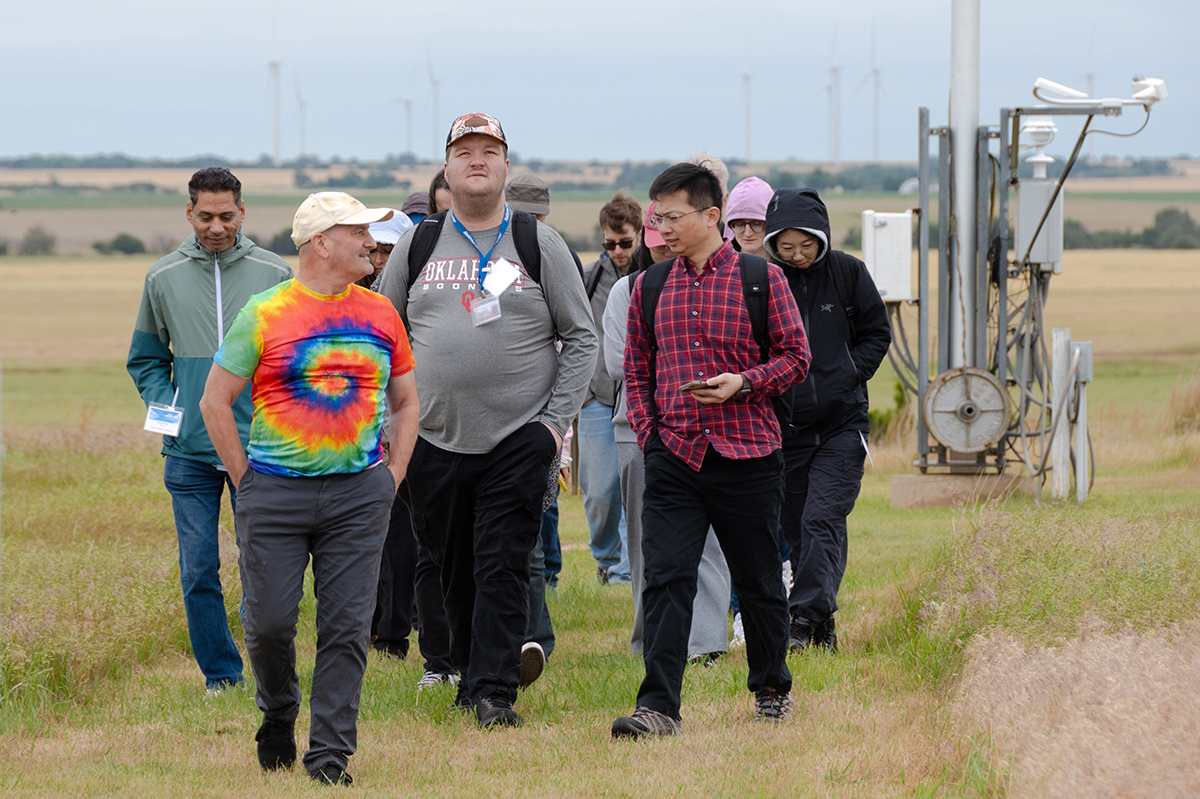
They came, they saw (all the amazing instruments), they coded, and they conquered the challenges of big open data! Twenty-eight students with new knowledge of ARM data and tools. Six reproducible workflows that use AI on ARM data. Two very tired but happy workforce development coordinators and one world-leading ARM User Facility.
Thank you to our instructors: Maria Zawadowicz, Andrew Dzambo, Adam Theisen, Connor Flynn, Alyssa Sockol, Hsi-Yen Ma, Mark Spychala, William Gustafson, Bobby Jackson, Bhupendra Raut, Chirag Shah, Maria Cadeddu, and Michael Giansiracusa. Thank you to the ARM operations staff at the Southern Great Plains observatory for taking time out to show us around, and a huge shoutout to CIWRO and its director, Greg McFarquhar, and to the National Weather Center for hosting us.
Authors’ note: AI (Claude Opus 4.8) was used to analyze and summarize the open GitHub repositories and assist in writing project descriptions.

Follow Us:






Keep up with the Atmospheric Observer
Updates on ARM news, events, and opportunities delivered to your inbox
ARM User Profile
ARM welcomes users from all institutions and nations. A free ARM user account is needed to access ARM data.