An official website of the United States government





ARM Produces First Characterized and Corrected NSA XSAPR Data
Published: 14 April 2026
The Atmospheric Radiation Measurement (ARM) User Facility has released its first characterized and corrected X-Band Scanning ARM Precipitation Radar (XSAPR) data from the North Slope of Alaska (NSA) atmospheric observatory. Covering April 2024 through April 2025, these XSAPR data are b1-level, meaning they underwent correction and quality control processes beyond ARM’s standard quality checks and corrections.
Radars and other remote sensing instruments at the NSA are used to study arctic cloud and precipitation processes that contribute to complex ocean-atmosphere-ice interactions. The XSAPR provides valuable dual-polarization measurements of arctic precipitation via surveillance, cross-section, and vertically pointing scans that repeat every 15 minutes. The radar has operated intermittently at the NSA since its 2011 installation, with more consistent operations starting in April 2024.
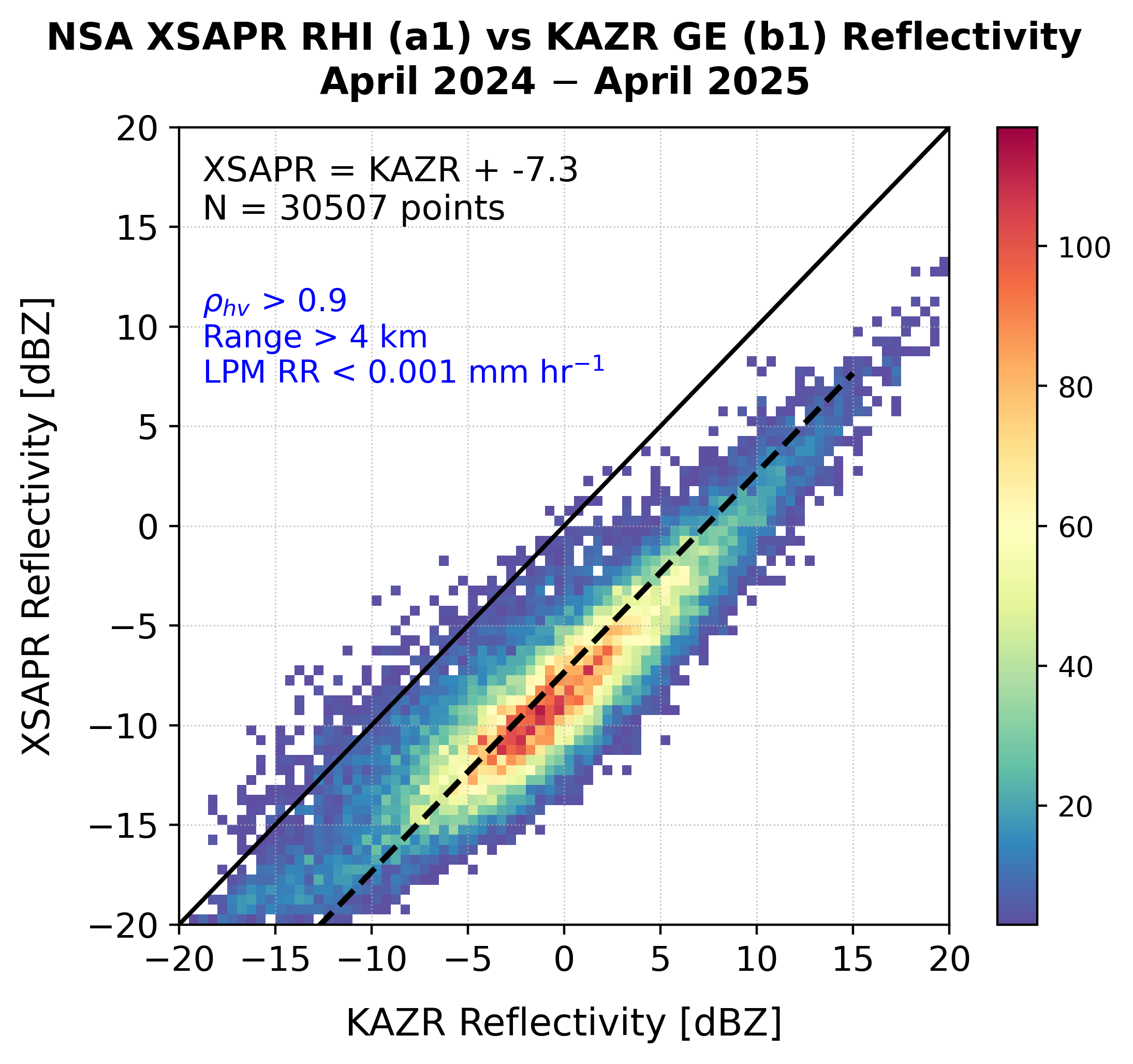
ARM staff completed a series of steps to produce the quality-controlled b1-level data from the NSA XSAPR. They cross-compared data from the XSAPR and nearby Ka-Band ARM Zenith Radar to determine the XSAPR reflectivity offsets, corrected differential reflectivity using vertically pointing and surveillance scans, and adjusted the mean Doppler velocity sign to match typical radar convention (positive away from the radar).
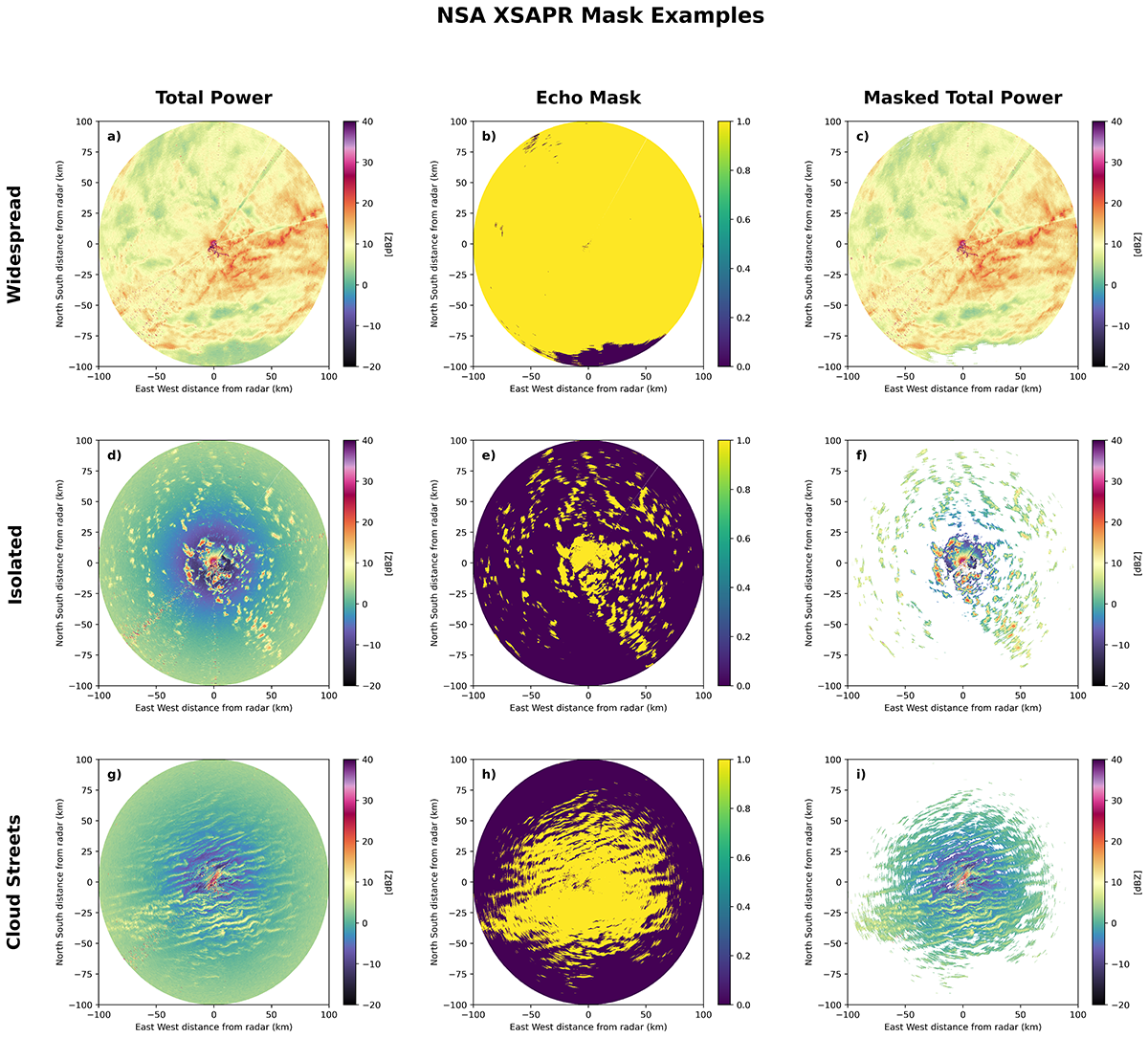
As they have done for other b1-level radar data sets, ARM staff developed an echo mask for the NSA XSAPR to distinguish background noise from signal.
The corrected and characterized NSA XSAPR data are available now in CfRadial format. The next set of b1-level data, covering May 2025 through April 2026, is expected to be released in summer 2026.
More information about the data, including the radar analysis, related corrections, and other known data quality issues that could not be corrected (e.g., periods of missing data from when the radar was offline for repairs), can be found in the NSA XSAPR b1-level data processing technical report.
Access the NSA XSAPR b1-level data in the ARM Data Center. (To download the data, first create an ARM account.)
For questions or to report data issues, please contact the ARM radar team.
To cite the data, please use doi:10.5439/3013114.

Follow Us:






Keep up with the Atmospheric Observer
Updates on ARM news, events, and opportunities delivered to your inbox
ARM User Profile
ARM welcomes users from all institutions and nations. A free ARM user account is needed to access ARM data.