An official website of the United States government





Reaching New Heights: ARM Tethered Balloon Systems Support Atmospheric Science
Published: 26 September 2025
From new instruments to dual balloon flights, these platforms push boundaries in research and operations
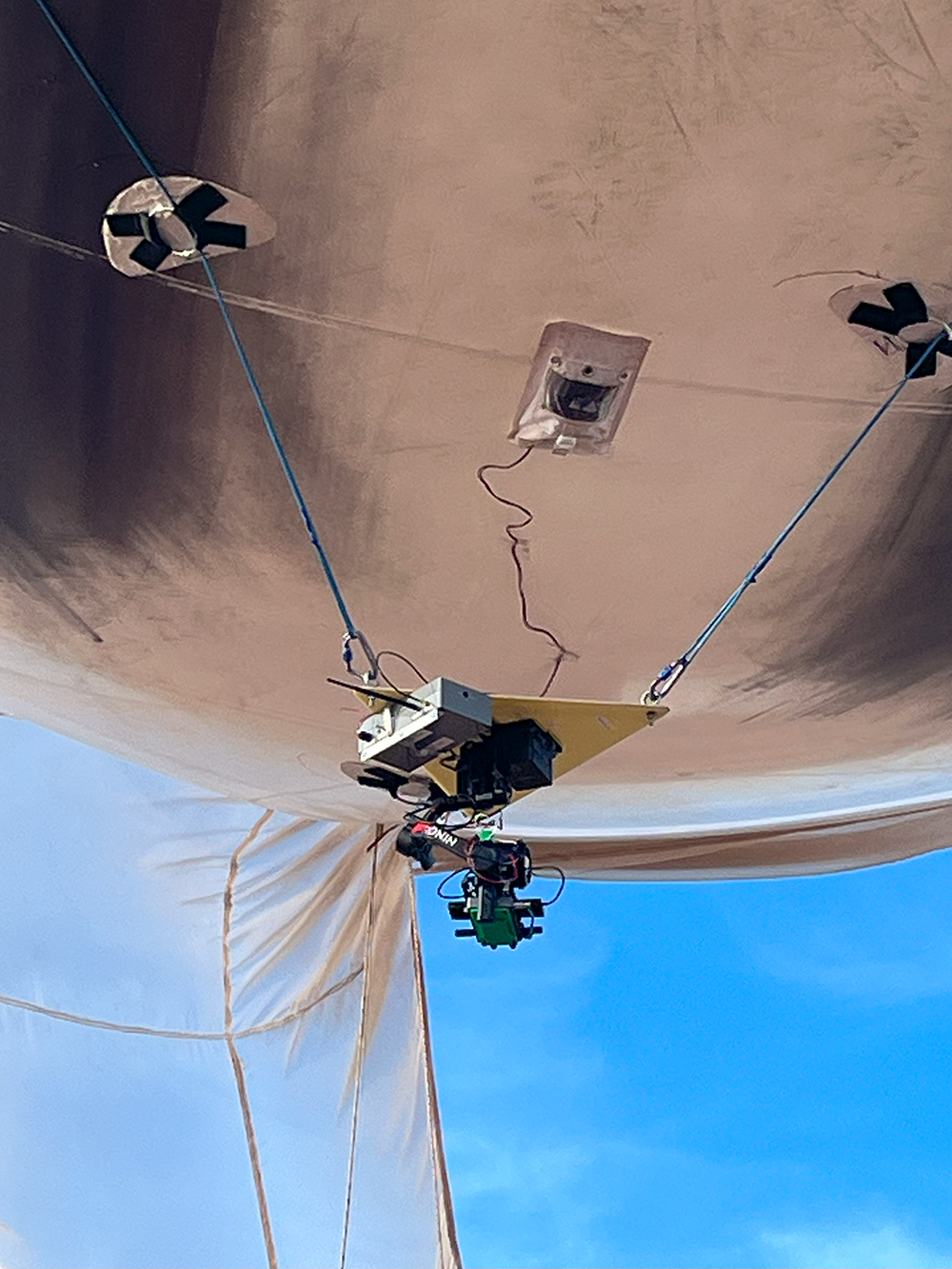
High above the Oklahoma plains, a bright tethered balloon system (TBS) danced in the wind, equipped with cutting-edge instrumentation designed to help transform our understanding of atmospheric dynamics.
In a humid Alabama forest and a coastal region near Baltimore, Maryland, a TBS captured crucial data to help unlock the secrets of cloud formation, atmospheric gases, new particle formation, and much more.
For the U.S. Department of Energy’s (DOE’s) Atmospheric Radiation Measurement (ARM) User Facility, fiscal year 2025 (FY2025) marked a time when these floating laboratories broke barriers in pursuing atmospheric data needed to evaluate and improve earth system models that inform energy infrastructure planning.
ARM’s TBS team not only racked up an impressive 300 hours of flight time in FY2025 but also introduced new capabilities and technologies to meet the evolving needs of ARM users. From deployments of new instruments to expanded operational flexibility, the year demonstrated the growing role of TBS in ARM atmospheric observations.
Data collected during the FY2025 flights are available in the ARM Data Center.
Breaking New Ground in Instrumentation
One of the most notable milestones of FY2025 was the deployment of advanced atmospheric gas and aerosol monitoring tools during fall flights at ARM’s Southern Great Plains (SGP) atmospheric observatory in Oklahoma.
The flights were in support of projects awarded through a joint user facility proposal call with DOE’s Environmental Molecular Sciences Laboratory (EMSL) as part of the Facilities Integrating Collaborations for User Science (FICUS) program.
At the SGP, the team flew a retroreflector—a device that reflects light or electromagnetic waves back to its source with minimal scattering—on the TBS. This capability enabled teams from Sandia National Laboratories in New Mexico and the National Institute of Standards and Technology (NIST) to perform the first demonstration of dual-comb spectroscopy to altitudes more than 1 kilometer (over 3,280 feet) above ground level.
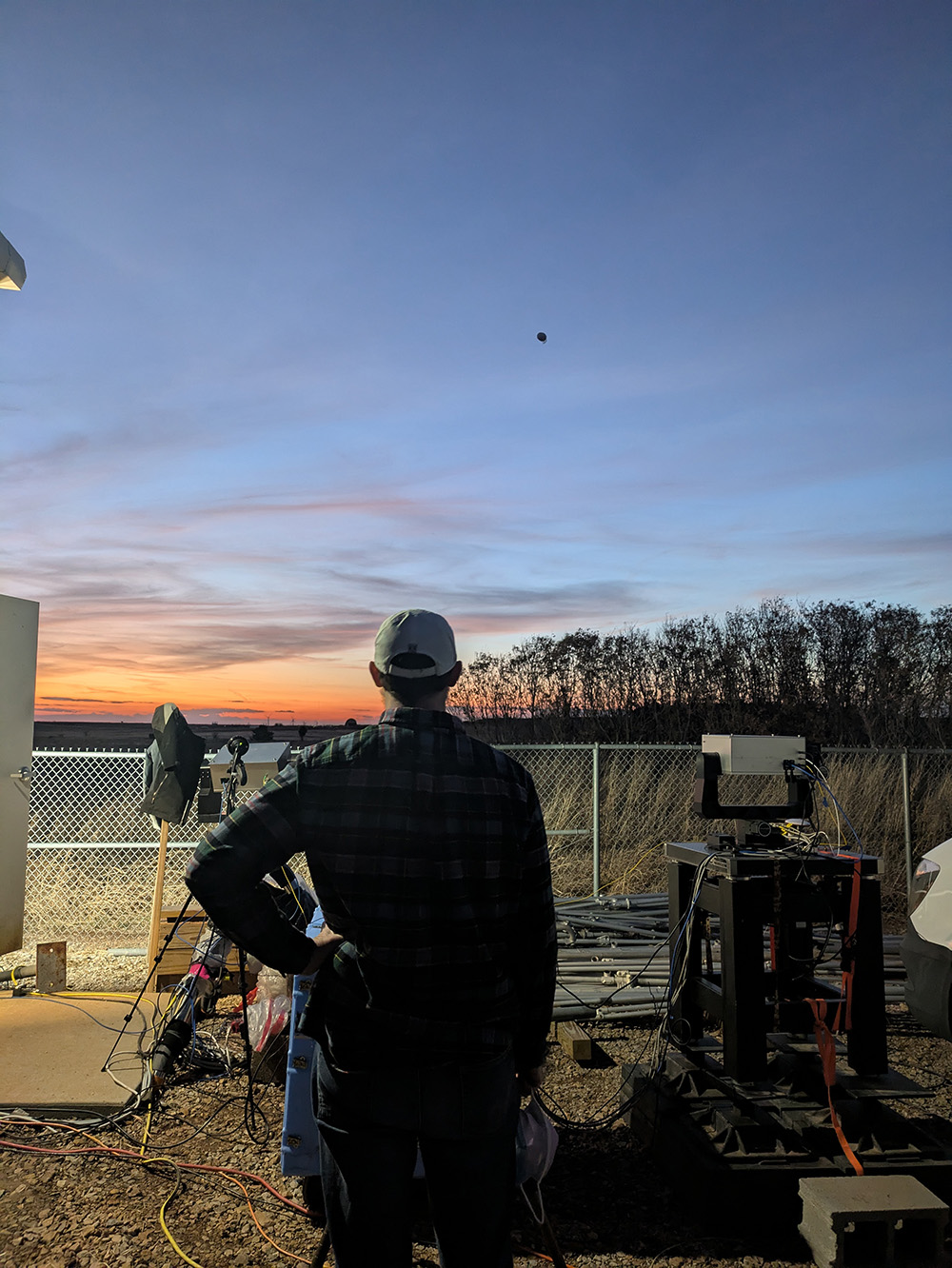
This highly precise optical measurement technique leverages the broad optical bandwidth and phase coherence of two optical frequency combs for fast, high-resolution spectral analysis of gases within the atmosphere based on their spectral absorption features.
Dari Dexheimer, ARM’s lead TBS instrument mentor from Sandia, points out that this innovative method not only expanded the capabilities of the TBS but also broke ground in how atmospheric gases can be studied in real-world conditions. “It was a great experience for TBS in which we got to collaborate with NIST and Sandia researchers on a new, cutting-edge technology,” she says.
Another significant accomplishment during the SGP flights involved the operation of ARM’s first in-house ice-nucleating particle sampler, developed by Sandia in conjunction with ARM ice-nucleating particle mentor Jessie Creamean of Colorado State University. Its successful deployment on the TBS enabled researchers to gather crucial data on particles that influence cloud formation processes.
Beyond this, ARM introduced a new high-frequency airborne sonic anemometer to deliver detailed measurements of wind speed, direction, and turbulence, promising even greater scientific insights ahead.
Turbulence measurements were not previously taken onboard the TBS, says Dexheimer. “The 60-hertz wind speed and direction measurements are being sampled rapidly to enable turbulence calculation.”
Navigating the Challenges of New Deployment Locations
The year also brought about advancements in ARM’s ability to operate the TBS in a variety of complex environments.
Flights during the Coast-Urban-Rural Atmospheric Gradient Experiment (CoURAGE) in February and July 2025 required navigating congested airspace near Baltimore.
“Flying at CoURAGE was notable just because it was a real struggle to get flight approvals,” says Dexheimer.
ARM worked closely with the Federal Aviation Administration (FAA) to secure approvals for regular daytime flights to collect vertical profiles of atmospheric variables, such as ozone and aerosols. The data can help scientists better understand the complex interactions between the urban environment and surrounding coastal and rural areas, which, in turn, helps to improve earth system models.
FY2025 also marked the first TBS flights at ARM’s new Bankhead National Forest (BNF) atmospheric observatory in Alabama, representing the culmination of years of planning.
The TBS team conducted four BNF missions during FY2025, with each mission lasting about two weeks. Daytime and nighttime TBS observations at the BNF supported research on biologically derived aerosols, such as bacteria and fungal spores, and atmospheric conditions over forested regions.
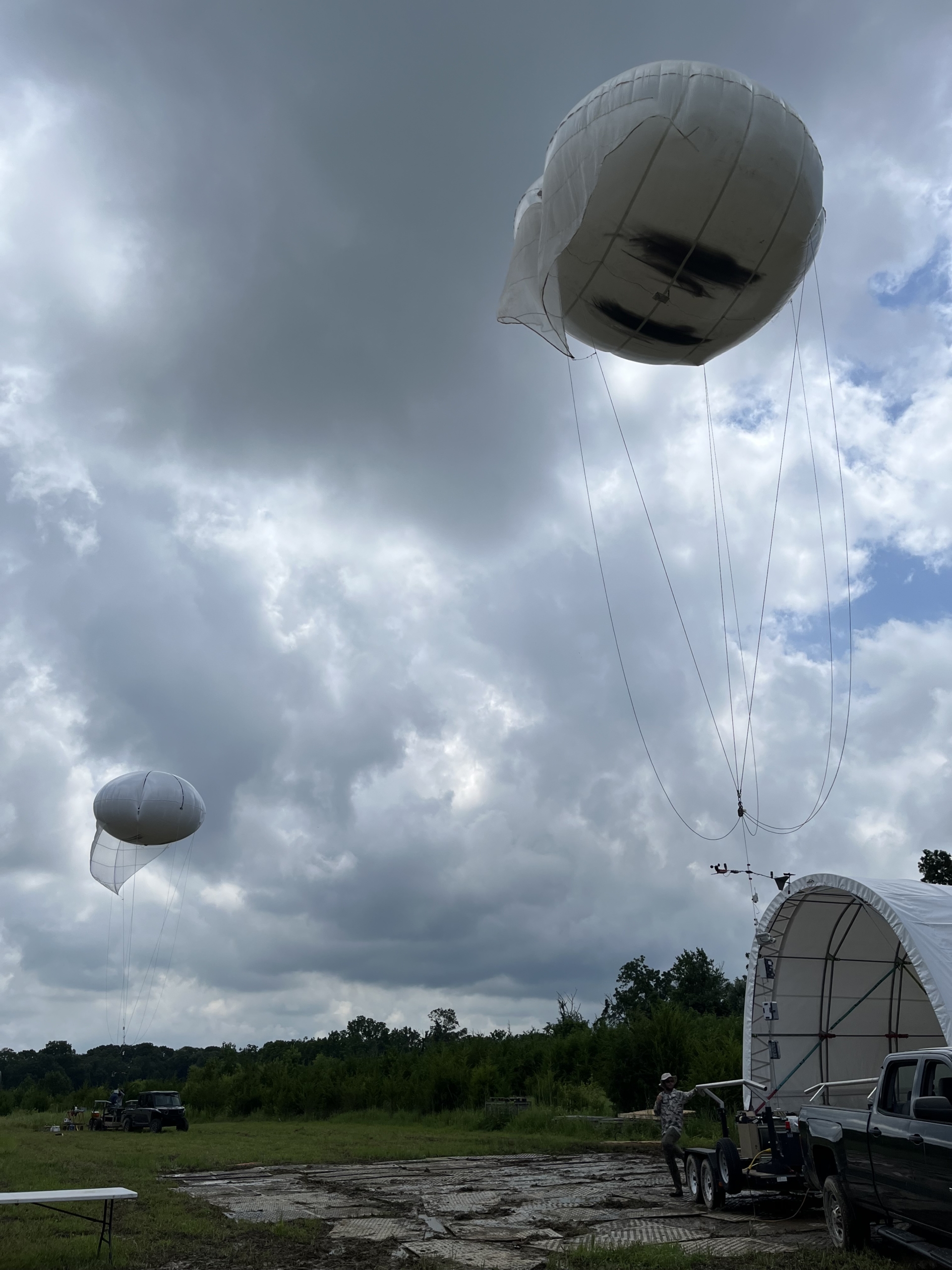
FAA officials made in-person visits to the BNF and CoURAGE sites and were pleased with both the daytime and nighttime lighting and marking on the TBS. In fact, they were able to view the TBS at the BNF from about 10 kilometers (more than 6 miles) away during night flights.
A Milestone in TBS Operations: Dual Balloon Flights
One of the year’s most exciting achievements occurred at CoURAGE on July 15, when the TBS team conducted its first dual balloon flight at the same location.
“Operating two balloons allows each balloon to do independent things,” says Dexheimer. “For instance, one balloon can hold steady at a specific altitude for extended sampling, while the other can collect data dynamically, going up and down with different payloads.”
This achievement addresses the growing demand for TBS time among ARM users, and, says Dexheimer, it opens up possibilities for future campaigns that require simultaneous operations with multiple payloads.
Helium Reclamation System
Amid an ongoing nationwide helium shortage, ARM is taking steps to ensure it is being a good steward of its helium.
ARM is working to add a helium reclamation system to operations to reduce waste and conserve resources. The system uses an industrial compressor to pump helium out of the balloons and store it in reusable cylinders. The goal is to reuse the gas two to three times before its purity levels become insufficient for further use.
As Dexheimer points out, helium is a finite resource, and reducing its consumption is important so TBS operations can remain environmentally and economically viable.
Testing of the reclamation system is in progress before full integration into TBS operations.
Author: Mike Wasem, Staff Writer, Pacific Northwest National Laboratory
# # #ARM is a DOE Office of Science user facility operated by nine DOE national laboratories.

Follow Us:






Keep up with the Atmospheric Observer
Updates on ARM news, events, and opportunities delivered to your inbox
ARM User Profile
ARM welcomes users from all institutions and nations. A free ARM user account is needed to access ARM data.