An official website of the United States government





ARM Workshop Report Explores Weather Impacts on Energy and National Security
Published: 28 January 2026
Workshop participants discuss how ARM observations can improve understanding of risks to the nation’s energy and security infrastructure
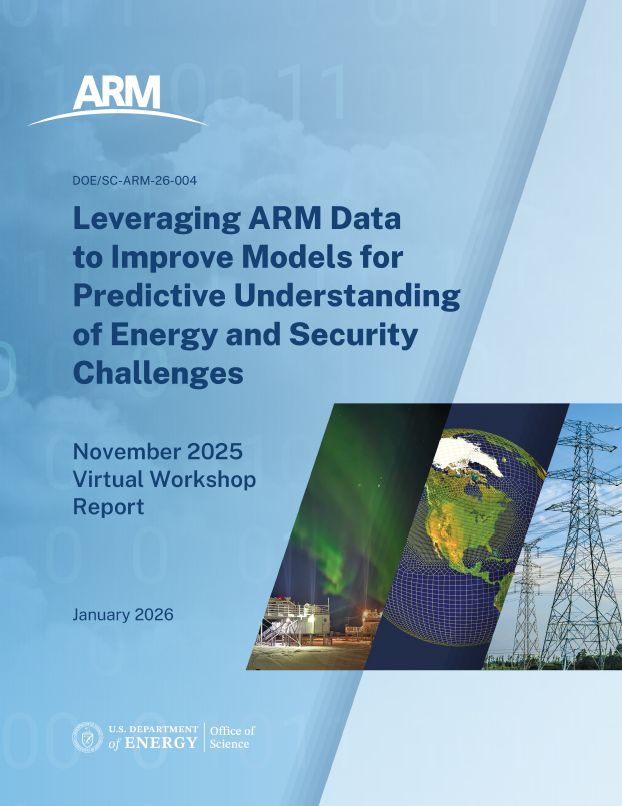
The U.S. Department of Energy’s (DOE’s) Atmospheric Radiation Measurement (ARM) User Facility has released its latest workshop report, titled Leveraging ARM Data to Improve Models for Predictive Understanding of Energy and Security Challenges. The report summarizes discussions from a virtual two-day workshop held in November 2025, in which experts explored critical atmospheric phenomena that affect energy systems and national security.
The workshop brought together 30 participants, including atmospheric scientists, earth system model developers, artificial intelligence (AI) experts, and energy and security specialists. They represented academia, national laboratories, and federal agencies.
Organizers requested white papers before the workshop to refine the scope and focus areas. Twenty-three papers were submitted, helping to address the workshop’s objectives:
- Identify energy- and security-relevant atmospheric processes where better observations or data sets could greatly improve predictive understanding.
- Characterize the limitations that restrict current modeling capabilities.
- Articulate practical pathways for ARM to enhance its scientific impact through measurement strategies, data products, and model integration.
The workshop was structured to center discussions on improving ARM’s observational strategies and integration of ARM data with models to improve predictive understanding of atmospheric phenomena that pose risks to energy systems, such as heat waves, winter storms, severe convection, and arctic processes.
“The risks we face from extreme weather events directly threaten our energy resilience and national security,” says ARM Director Jim Mather. “This workshop identifies opportunities for leveraging the expertise of the ARM community to bridge gaps in predictive modeling and operational preparedness.”
Assessing Energy-Related Weather Hazards
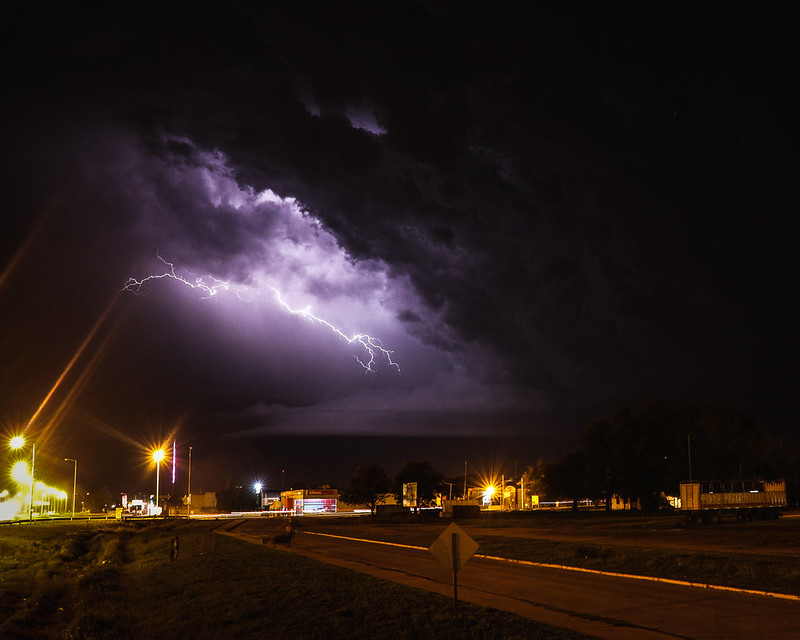
Workshop participants highlighted how high-impact weather events can affect energy infrastructure and delivery. Each session encouraged attendees to discuss atmospheric phenomena with significant impacts.
A survey distributed between the workshop dates gathered input on weather phenomena across three factors: their impact, the ability of models to forecast them, and ARM’s ability to observe them. The top areas identified were:
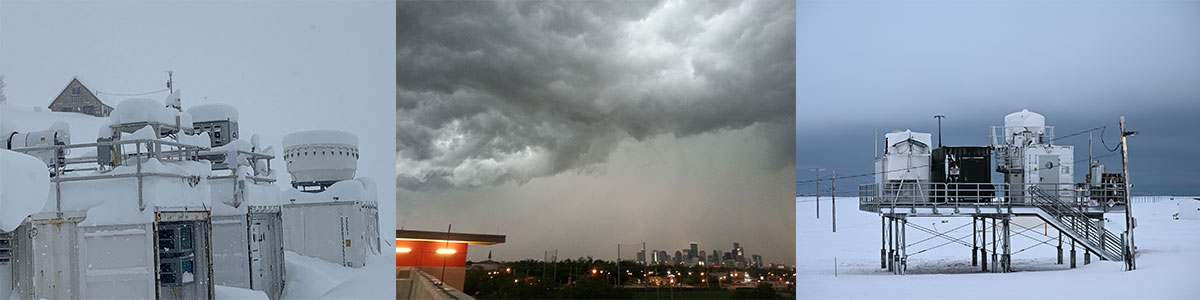
- Winter storms and cold-weather hazards: Freezing rain, icing, and snow accumulation can damage energy infrastructure, such as transmission lines. Workshop discussions highlighted ARM’s ability to deploy enhanced retrievals and curate benchmark data sets that address these risks.
- Severe convection and high-impact storms: Damaging winds, heavy precipitation, hail, and lightning were identified as key severe-storm hazards. Participants called on ARM to refine radar-scanning strategies and improve observation density to better model microphysical processes.
- Arctic processes: In the Arctic, changes in the tundra and sea ice, along with conditions driven by storms, polar lows, and cyclones, have direct effects on energy and security. ARM is well positioned to observe arctic processes with its North Slope of Alaska atmospheric observatory, which has collected data since 1997.
These phenomena can disrupt power grids, affect infrastructure, and cause significant fluctuations in energy demand. For example, freezing rain and snow can cause grid failures, while melting arctic permafrost can affect industrial operations and transportation.
Addressing Threats to National Security
Participants went beyond atmospheric phenomena and identified additional security concerns and vulnerabilities, including the transport of aerosol-borne pathogens and the potential impacts of nuclear events. They emphasized the increasing need to incorporate advanced observational data into predictive frameworks to effectively address these challenges.
“Security is not just a matter of safeguarding today’s operations but of preparing for tomorrow’s challenges,” says Mather, underscoring the capacity of ARM’s mission. “It is how advancing our observational and modeling frameworks can strengthen national security.”
Aligning Capabilities With National Needs
“ARM is structured to support and enable groundbreaking science that enhances our understanding of extreme meteorological events. Whether it’s targeted observations to refine models or providing tailored data sets to understand atmospheric processes, ARM is uniquely positioned to lead these efforts.”
ARM Director Jim Mather
The workshop report highlights steps ARM can take to address urgent observational and modeling needs. Among the recommendations were:
- Enhanced observational systems: Deploy mobile platforms equipped with agile, instrumented platforms. These systems should be positioned to study extreme weather in dynamic contexts.
- High-temporal-resolution data: Enhance data collection of phenomena such as transient wind gusts and precipitation bursts, which often damage energy infrastructure.
- Integrated data bundles: Standardize data sets that combine radars, lidars, microwave radiometers, and aerosol instruments to address phenomena such as winter storms, wildfires, and arctic fog.
- AI-ready tools and applications: Expand capabilities for AI applications, including observational system simulation experiments (OSSEs), risk-based analyses for high-impact phenomena, and advancements in measurement-based modeling.
- Hardened infrastructure: Ensure critical ARM instruments remain operational even under severe conditions, such as heavy winds or intense precipitation.
- Prioritized updates for ARM sites: Optimize observing capabilities to better capture spatial variability and support detailed regional analysis.
- Instrumentation enhancement: Improve vertical profiling of cloud and fog boundaries by increasing the density and consistency of flux tower deployments across sites.
- Data products: Deliver data products to effectively address uncertainties in model predictions.
- Use of hierarchy models: To link ARM observations to global-scale models, run models ranging from large-eddy simulation scales (spatial resolutions of tens to hundreds of meters) to the global scale.
Workshop participants urged ARM to align its capabilities more closely with DOE priorities by strengthening collaborations with modeling communities, particularly the community that works with DOE’s Energy Exascale Earth System Model (E3SM). This would benefit from using AI to improve data applications and conducting OSSEs to enhance measurement strategies.
“ARM is structured to support and enable groundbreaking science that enhances our understanding of extreme meteorological events,” says Mather. “Whether it’s targeted observations to refine models or providing tailored data sets to understand atmospheric processes, ARM is uniquely positioned to lead these efforts.”
Moving Forward
According to Mather, the workshop revealed that the challenges posed by phenomena such as heat waves, cold snaps, and strong storms require an interdisciplinary approach that combines advanced observational systems deployed in novel ways, careful data curation, and coordinated modeling activities.
“The experts who participated in this workshop made a strong argument for moving forward to better coordinate future efforts with stakeholders and incorporate observational results into real-world energy and security applications,” says Mather.
The full report is available online on ARM’s website and provides detailed insights into the challenges, opportunities, and priorities discussed during the workshop. For more information, readers can review the detailed findings and practical recommendations offered by participants.
Author: Mike Wasem, Staff Writer, Pacific Northwest National Laboratory
# # #ARM is a DOE Office of Science user facility operated by nine DOE national laboratories.

Follow Us:






Keep up with the Atmospheric Observer
Updates on ARM news, events, and opportunities delivered to your inbox
ARM User Profile
ARM welcomes users from all institutions and nations. A free ARM user account is needed to access ARM data.