An official website of the United States government





Remembering Former NSA Site Scientist Johannes Verlinde
Published: 24 March 2026
Longtime Penn State professor led some of ARM’s most enduring arctic campaigns
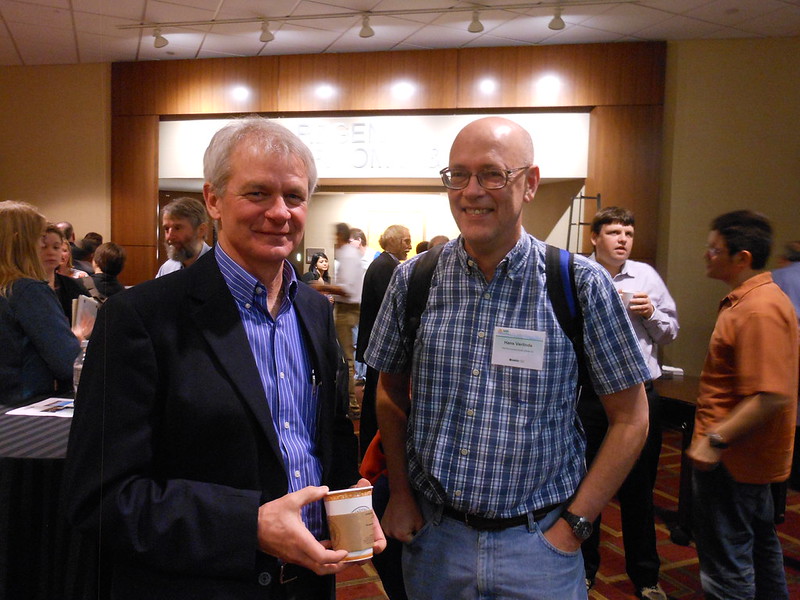
The Atmospheric Radiation Measurement (ARM) User Facility is sad to report that Johannes “Hans” Verlinde, who was a longtime site scientist for ARM’s North Slope of Alaska (NSA) atmospheric observatory, passed away March 6, 2026. Verlinde was 67.
“Hans was a great human being and a great scientist,” says ARM Director Jim Mather, who first met Verlinde at Pennsylvania State University. Verlinde started teaching there in 1993, around the time Mather began working with ARM as a postdoctoral research associate at Penn State.
Verlinde, a native of Pretoria, South Africa, spent 28 years at Penn State, which granted him the honorary title of professor emeritus of meteorology and atmospheric science. His research focused on cloud processes, radar meteorology, and remote sensing of clouds. According to ResearchGate, he had 85 publications, and his works have been cited more than 5,000 times.
At the time of his passing, Verlinde had published 48 ARM-supported journal articles exploring topics such as lidar and radar simulators, high tropical cirrus clouds, summer ice melt in West Antarctica, and precipitation from polar supercooled clouds.
Among his field activities, he participated in the international Nauru99 field campaign, conducted in the summer of 1999 on and around the island of Nauru in the Tropical Western Pacific. Scientists used Nauru99 data from a variety of instrumented platforms to determine how representative island measurements from ARM’s Nauru site (operational from 1998 to 2013) were of the surrounding ocean.
Verlinde had a particularly keen research interest in the Arctic, leading the NSA site science team from 2002 through 2015.
“He was a force in advancing our understanding of key phenomena in the arctic system, particularly in the area of arctic clouds and boundary-layer processes,” says Gijs de Boer, a former site scientist for the NSA and the ARM Mobile Facility deployment at Oliktok Point, Alaska.
M-PACE’s Lasting Legacy
In 2004, Verlinde and Penn State colleague Jerry Harrington co-led ARM’s Mixed-Phase Arctic Cloud Experiment (M‑PACE) in northern Alaska. M-PACE collected aerial and ground-based data around the North Slope to help characterize properties and processes of mixed-phase clouds, which are made up of both ice and liquid water.
M-PACE has tallied 90 journal articles as of mid-March 2026. Among them are papers detailing how M-PACE data have been used to evaluate and improve models such as the U.S. Department of Energy’s flagship Energy Exascale Earth System Model (E3SM).
Further underscoring the campaign’s significance, M-PACE was a career launch pad for several scientists who went on to make substantial contributions to arctic atmospheric research. For one, M-PACE marked the first arctic project that de Boer, now an interim associate laboratory director at Brookhaven National Laboratory in New York, worked on as a PhD student.
De Boer notes other scientists who were at that time relatively early in their careers and heavily influenced by (and engaged with) M-PACE, including Alex Avramov, Bob Holz, Jennifer Kay, Anthony Prenni, Matthew Shupe, and Dave Turner.
ISDAC and Other Impacts on Arctic Research
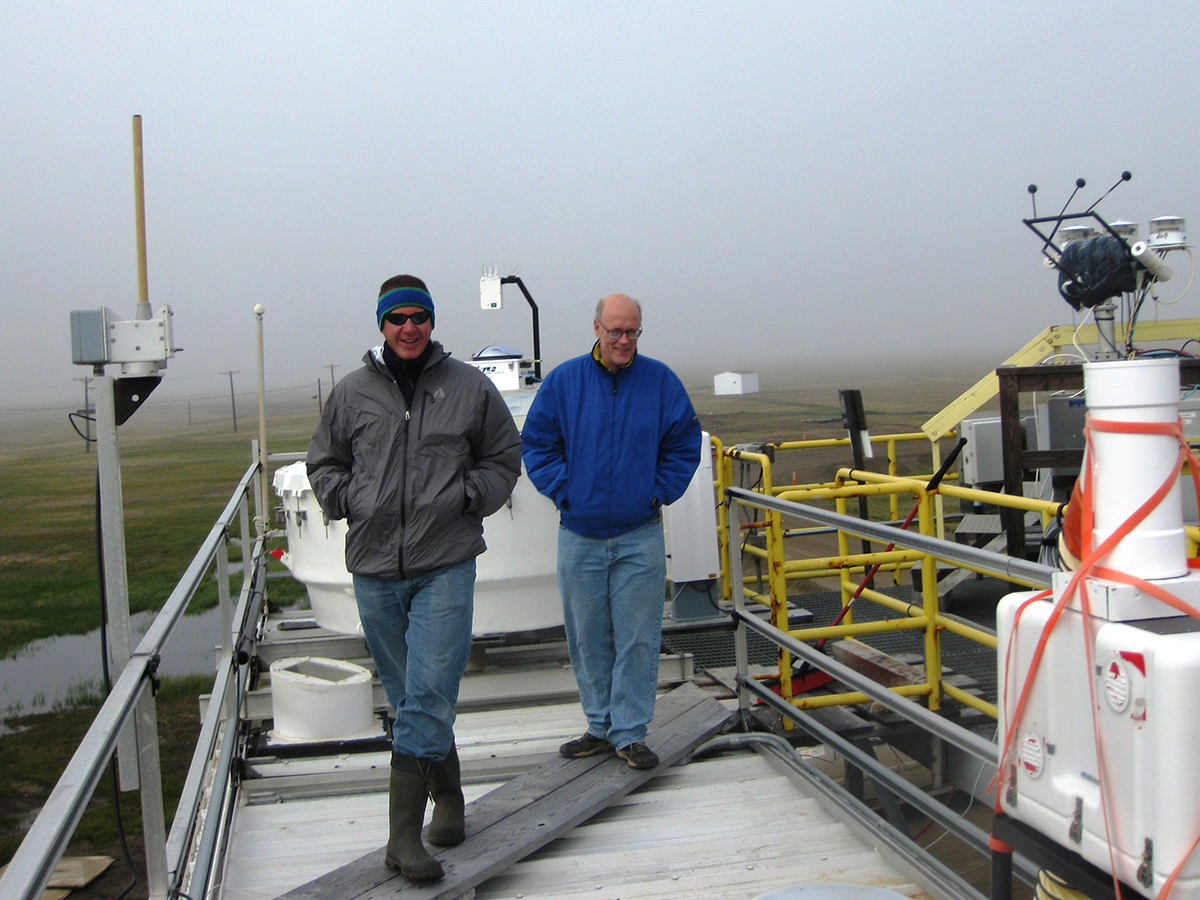
In 2008, Verlinde was the co-principal investigator for another important ARM NSA field campaign, the Indirect and Semi-Direct Aerosol Campaign (ISDAC). He co-led ISDAC with Steven Ghan, a scientist who is now retired from Pacific Northwest National Laboratory in Washington state.
ISDAC provided data for comparison with M-PACE measurements and for determining the effects of aerosols on arctic clouds and earth systems. As of mid-March 2026, it has been featured in 72 journal articles. Of those articles, 23 used both ISDAC and M-PACE data.
Verlinde helped document parts of ARM’s arctic and radar history in the ARM monograph, a 2016 collection of articles chronicling ARM’s first 20 years. He was the lead author of an article on the NSA sites, and he co-wrote an article on ARM’s millimeter-wavelength cloud radars.
In the last decade, Verlinde served as a co-investigator for two more major ARM campaigns: the 2015–2017 ARM West Antarctic Radiation Experiment (AWARE) and the 2019–2020 Multidisciplinary Drifting Observatory for the Study of Arctic Climate (MOSAiC) expedition.
He is greatly missed by friends and colleagues in the ARM community.
To learn more about Verlinde, please see his obituary. We also invite you to share your memories of him on ARM’s Facebook page.
Author: Katie Dorsey, Staff Writer, Pacific Northwest National Laboratory
# # #ARM is a DOE Office of Science user facility operated by nine DOE national laboratories.

Follow Us:






Keep up with the Atmospheric Observer
Updates on ARM news, events, and opportunities delivered to your inbox
ARM User Profile
ARM welcomes users from all institutions and nations. A free ARM user account is needed to access ARM data.