An official website of the United States government





ARM Navigating Changes in Data Quality Operations
Published: 28 May 2026
A new organizational structure addresses evolving needs
The Atmospheric Radiation Measurement (ARM) User Facility is updating the organizational structure for its data quality (DQ) operations to be responsive to evolving needs. While instrumentation, data products, and software tools continue to increase in complexity, new techniques in artificial intelligence (AI) and machine learning (ML) have provided opportunities to streamline ARM DQ operations.
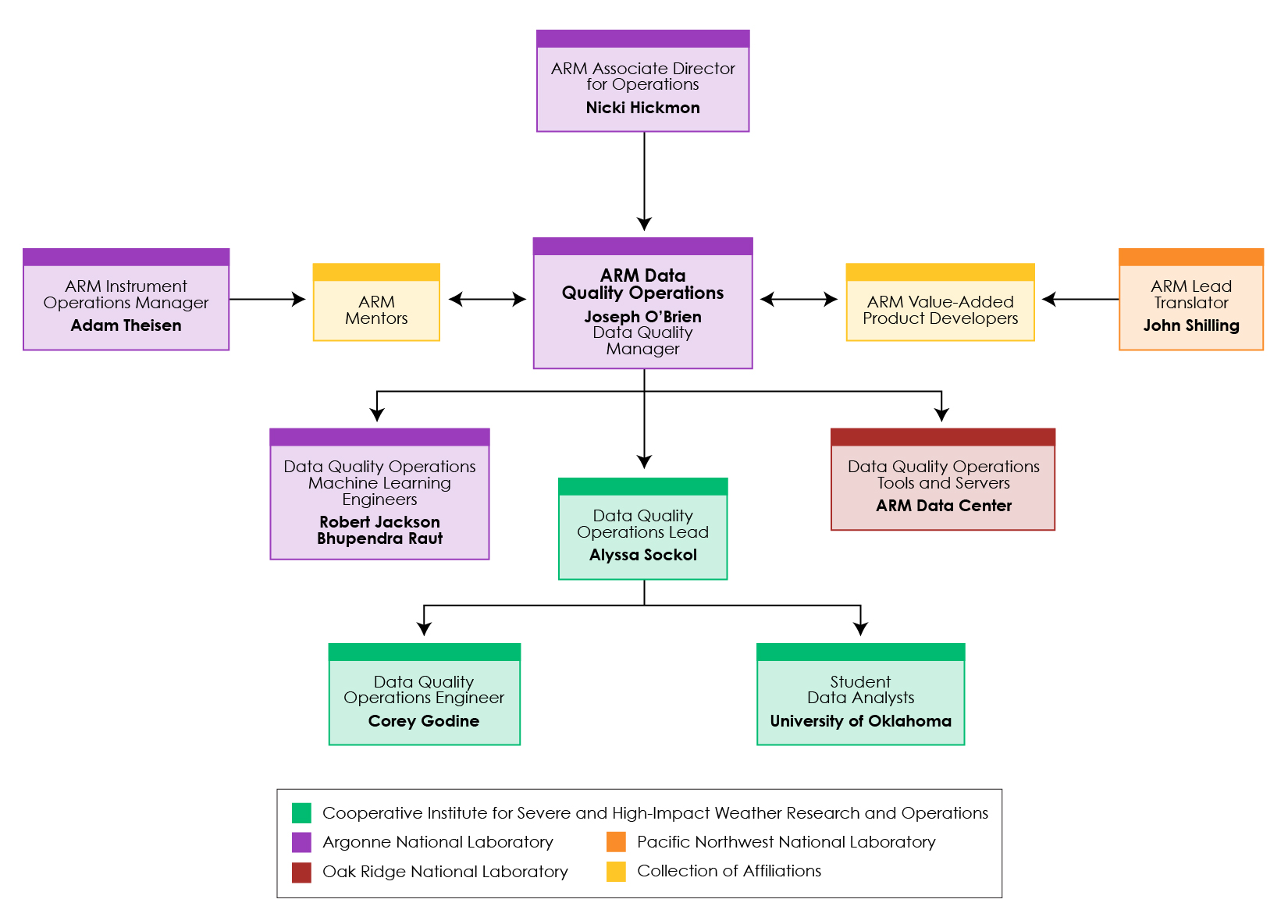
To prepare for the future of DQ activities while also responding to recent personnel changes, ARM created a new organizational chart for its DQ operations, including analysis, engineering, tool and server maintenance, and overall management. The new structure broadens involvement in DQ activities across the user facility while maintaining daily data monitoring and troubleshooting.
Diving Into the New Structure
For more information: Details about how ARM ensures and documents data quality are available on the Data Quality Program web page.
The central pillar of ARM’s DQ operations remains the ARM DQ Office, which is located in the Cooperative Institute for Severe and High-Impact Weather Research and Operations (CIWRO) at the University of Oklahoma. Alyssa Sockol now leads the DQ Office, which serves as the first line of defense by actively monitoring DQ and managing the process for resolving DQ issues. While Sockol’s lead role brings some new responsibilities, she still actively performs DQ analyses and creates code for plots and metrics that visualize ARM instrument data and DQ information.
Some responsibilities previously with the DQ Office have moved to ARM staff at other institutions. Motivating these moves were two major management changes in 2025. Associate manager Ken Kehoe, who spent 21 years with the DQ Office, passed away in August at age 48. Manager Randy Peppler, who helped establish the DQ Office more than 25 years ago, retired from CIWRO at the end of December. He remains at the University of Oklahoma and an active participant in the reorganization.
Joe O’Brien, who is at Argonne National Laboratory in Illinois, has taken on the role of ARM DQ manager, reporting to ARM’s associate director for operations. O’Brien leads engagement activities intended to identify and design new DQ workflows and processes, while Sockol manages the ongoing DQ operational activities.
Since joining ARM in 2022 with a background in ground and airborne data analysis, O’Brien has helped develop ARM-supported open-source toolkits and radar value-added products (VAPs) and served as an associate instrument mentor for the micropulse lidar. He also recently became a workforce development coordinator for ARM.
As the use of AI grows across ARM and the scientific community, ARM now has two Argonne scientists, Bhupendra Raut and Robert Jackson, working as ML engineers, supporting the ML framework built at the DQ Office targeting improved identification of DQ issues.
As a part of ARM streamlining activities, the ARM Data Center at Oak Ridge National Laboratory in Tennessee increased its support for maintaining DQ operations tools and servers. This work first began in January 2023.
Though staff are distributed across multiple institutions, the collective team is focused on maintaining ongoing DQ monitoring and troubleshooting while engaging with ARM infrastructure staff and users to advance tools and workflows to improve ARM DQ and communication of DQ information to users.
An ARM-Wide Focus on DQ
“Historically, if the mentors needed a new metric put together, they would contact Alyssa (Sockol) directly, and I think that works incredibly well on a case-to-case basis. I see my role as working with Adam (Theisen) and John (Shilling), the lead translator, to have a whole systematic approach to how we’re implementing these changes and coordinating increased tool usage.”
Joe O’Brien, ARM data quality operations manager
Even for the small but mighty DQ Office, flagging and resolving DQ issues is a hefty lift. If all six of ARM’s ground-based atmospheric observatories were operating at once, the DQ Office might be monitoring nearly 1,000 datastreams along with more than 10,000 variables, which are the measurements that make up those datastreams.
To strengthen and expand the involvement of other ARM staff in DQ activities, the new organizational chart highlights the connection of VAP developers and instrument mentors to DQ operations. Through active engagement with John Shilling, who coordinates VAP development projects as ARM’s lead science translator, and ARM Instrument Operations Manager Adam Theisen, O’Brien will develop new workflows to improve DQ implementation across teams.
“Historically, if the mentors needed a new metric put together, they would contact Alyssa directly, and I think that works incredibly well on a case-to-case basis,” says O’Brien. “I see my role as working with Adam and John, the lead translator, to have a whole systematic approach to how we’re implementing these changes and coordinating increased tool usage.”
Staff are already noting more effective distribution of work and alignment of tasks with the right expertise.
“As that continues,” says Sockol, “I expect users will see faster turnaround times and clearer, more consistent support, because there’s less ambiguity about ownership and more direct routing of requests.”
The ARM-wide focus on DQ will be an ongoing theme at upcoming internal meetings. For instance, ARM is planning a September 2026 developers meeting at Oak Ridge that will foster continuing conversations between the DQ Office, instrument mentors, and VAP developers.
Areas for Development
More changes are expected for DQ operations.
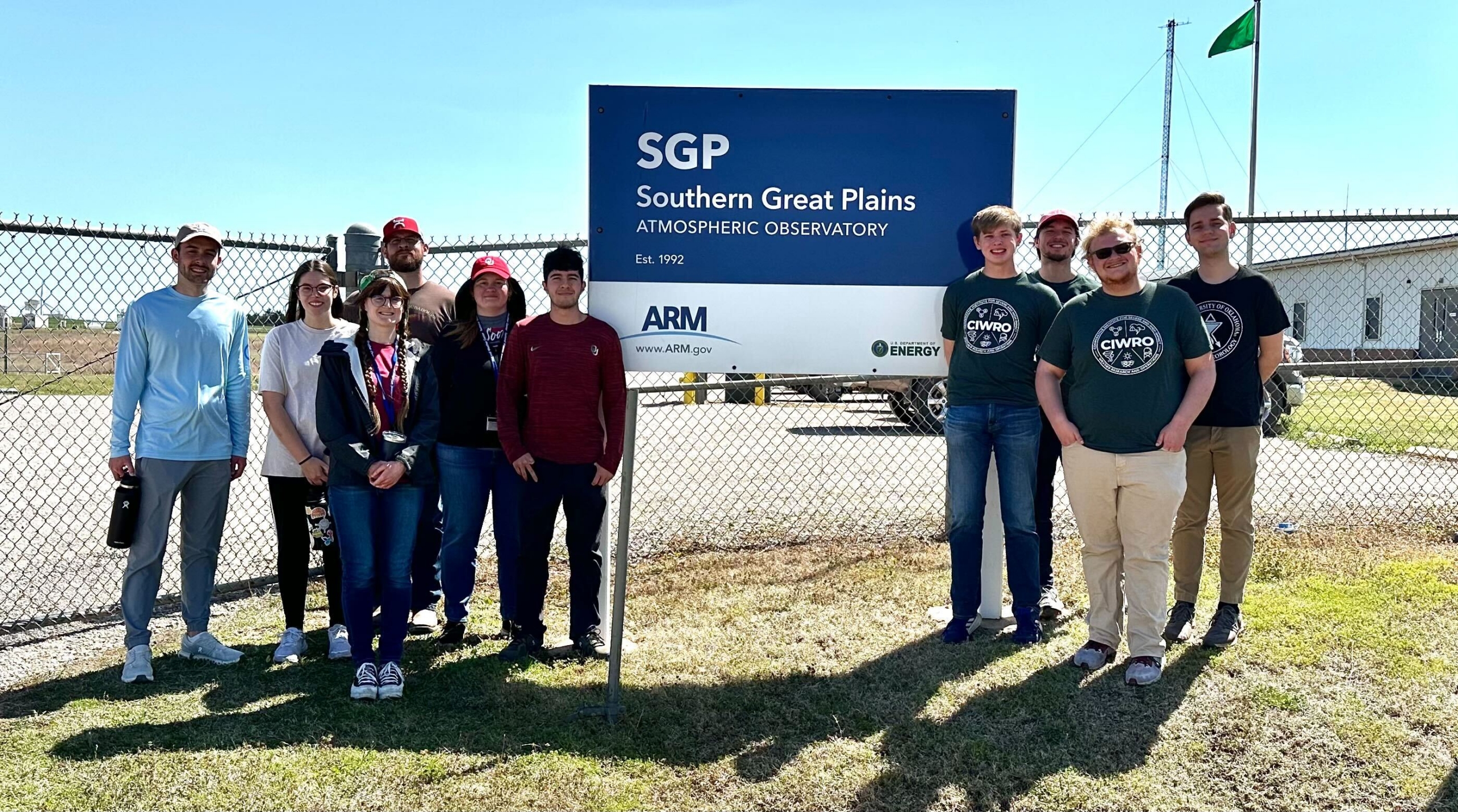
Each year, the DQ Office employs eight to 12 student DQ analysts. Currently, the analysts review data daily and send weekly DQ assessments of instrument datastreams to the mentors who are responsible for these instruments. If an analyst spots a data issue, they will write a Data Quality Problem Report for the mentor to review and help resolve.
Theisen says there are untapped avenues for the student analysts to work more closely with the instrument mentors, including possible workforce development opportunities through U.S. Department of Energy internship programs.
Meanwhile, ARM is exploring new ways to apply AI and ML to DQ activities.
In one of ARM’s early AI initiatives, Mia Li (formerly at the DQ Office) built an ML framework for detecting anomalies in ARM data. The first stage of the project was focused on detecting and investigating spikes in relative humidity data from the surface meteorological system at ARM’s North Slope of Alaska atmospheric observatory. Now, Raut and Jackson are extending the framework to help pinpoint possible issues in data from ARM’s eddy correlation flux measurement systems.
Peppler’s Career Commitment to DQ
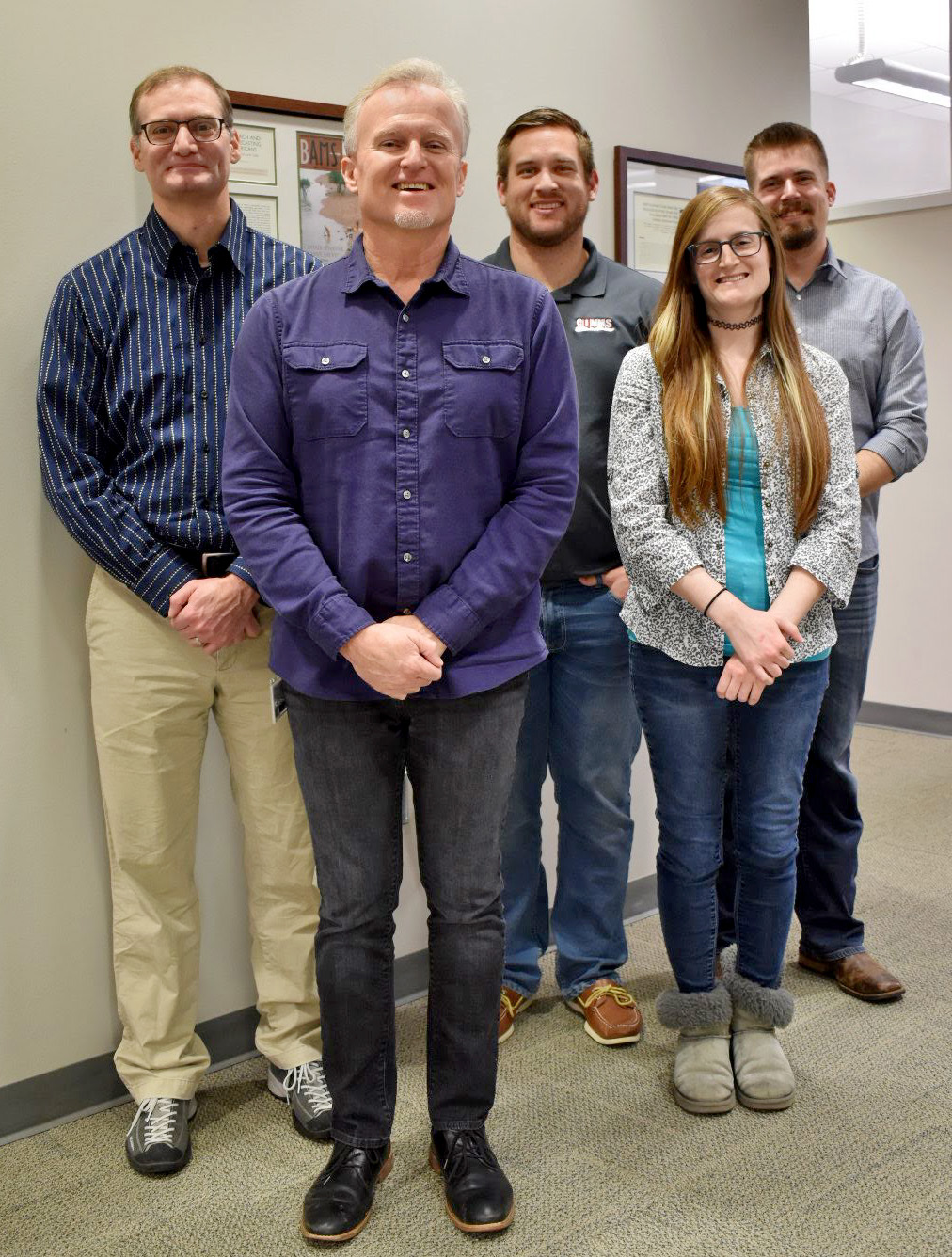
Through this transitional period and beyond, ARM will build on a foundation of exemplary DQ practices and user service established under Peppler, who has been with the DQ Office since it began in July 2000.
For much of ARM’s first decade, procedures for ensuring DQ varied across ARM’s sites. The DQ Office consolidated those under one roof and developed one set of DQ standards, processes, and reports for all sites.
Theisen, who worked in the DQ Office from 2010 to 2018, credits Peppler for always looking beyond the current state of DQ and supporting the use of cutting-edge technologies, such as ML algorithms, in DQ efforts. In addition, the DQ Office developed a set of tools—DQ-Explorer, DQ-Plotbrowser, and DQ-Zoom—to help inspect data and identify potential issues.
Sockol says Peppler’s legacy is also evident in the team he built in the DQ Office.
“By trusting people to do their jobs, he’s created a really effective research environment where we aren’t afraid to try new things to make the DQO (DQ Office) run more smoothly,” she adds.
Peppler plans to stick with ARM as long as it will have him. He was the associate site scientist for the Southern Great Plains observatory from August 1995 until the DQ Office opened in the summer of 2000.
“This is like the best thing that I think I’ve ever done, to be part of ARM, because it’s like a big family,” says Peppler. “I’ve known these people all these years, and everybody’s been so collegial.”
Hackathon Boosts DQ Expertise Among ARM Staff
Peppler and other ARM staff participated in a DQ hackathon from April 13 to 17, 2026, at the DQ Office. In contrast to hackathons where teams compete to solve problems or create new products over one to two days, the DQ hackathon was organized to help increase the number of ARM staff knowledgeable about DQ processes.
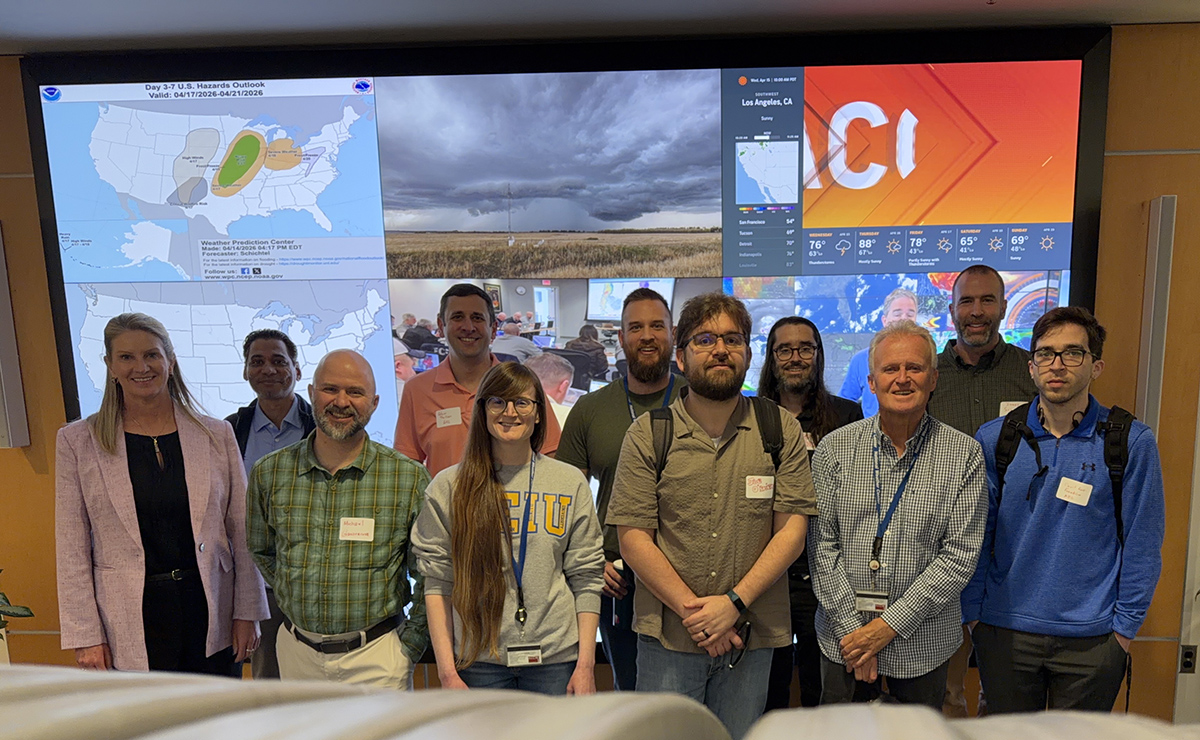
Besides Peppler, attendees included O’Brien, Raut, Jackson, Sockol, Godine, Theisen, Hickmon, ARM Data Center staff (Michael Giansiracusa, David Rose-Franklin, and James Schneider), and several of the student analysts. Some ARM staff attended virtually for a session on coordination between the DQ Office and instrument mentors.
Attendees learned from one another about DQ processing, procedures, tools, and related ML work. They also went through AI/ML tutorials for ARM’s May 2026 Big Open Data Science Summer School in Oklahoma.
For those involved, the hackathon reaffirmed ARM’s commitment to providing the highest-quality data possible for atmospheric research, even in times of change.
ARM staff will share more about the hackathon with users during the 2026 Joint ARM User Facility/Atmospheric System Research (ASR) Principal Investigators Meeting, taking place virtually from July 21 to 23.

Follow Us:






Keep up with the Atmospheric Observer
Updates on ARM news, events, and opportunities delivered to your inbox
ARM User Profile
ARM welcomes users from all institutions and nations. A free ARM user account is needed to access ARM data.