An official website of the United States government





Introducing the New ARM Model Advisory Committee
Published: 28 May 2026
Editor’s note: This is an update from ARM Associate Director for Research Jennifer Comstock. Artificial intelligence helped with the drafting of this post.
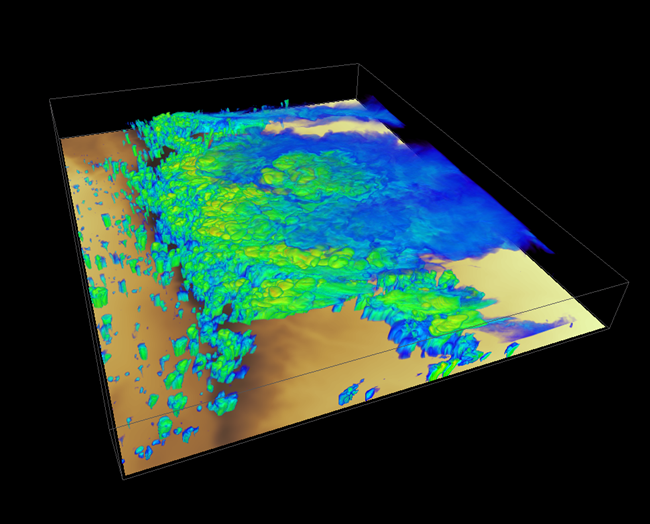
ARM has launched a new advisory group designed to help deepen the connection between ARM data and the scientists who use them for atmospheric process understanding and improving models. This effort is in response to recommendations from the 2024 ARM Triennial Review.
ARM’s worldwide collection of cloud, aerosol, precipitation, and radiation measurements is incredibly valuable for the modeling community, but using complex data effectively can be challenging. That’s where the new ARM Model Advisory Committee (AMAC) comes in. This group of experts will work together to help ARM and the modeling community better align their efforts. Their work will focus on:
- identifying the highest‑impact ways in which ARM data can support model development
- exploring opportunities to create data sets and benchmark cases that are easier for scientists to use for model development and evaluation
- highlighting important science questions where ARM observations could make a difference
- helping shape tools, workflows, and collaborations that bring data and models closer together.
The committee will meet quarterly to engage in targeted discussions, working toward a workshop to gather insights from the broader scientific community and develop a coordinated plan for continued engagement with modelers.
Members Come Together for First Meeting

The advisory committee brings together atmospheric scientists, modelers, and data experts from national labs and universities. Together, they represent a wide range of experience: cloud microphysics, land-atmosphere interactions, boundary-layer processes, aerosols, data assimilation, artificial intelligence, and modeling across scales.
Two members volunteered to be co-leads: Yan Feng of Argonne National Laboratory in Illinois and Hailong Wang of Pacific Northwest National Laboratory in Washington state. The full group is listed on the new AMAC web page.
On March 30, 2026, the AMAC had its first meeting, where ARM provided an overview of current opportunities and ongoing activities, such as the Large-Eddy Simulation (LES) ARM Symbiotic Simulation and Observation (LASSO) activity. The remainder of the time was spent brainstorming ideas for future meetings. Members discussed identifying key science drivers to focus around, such as severe convection, arctic processes, frozen precipitation, and winter storms, which are aligned with DOE’s Water for Energy focus. Data readiness, including robust data quality, consistency, and uncertainties, was also a priority.
Looking Ahead
This committee will play an important role in shaping ARM’s future by ensuring that its measurements and data products better integrate with modeling tools essential for earth system research. The AMAC is also focused on strengthening connections with the multisector modeling community and supporting the DOE Biological and Environmental Research (BER) program’s focus on extreme weather, hydrological hazards, and impacts on energy-related infrastructure. By fostering these relationships, ARM aims to broaden its impact and encourage collaborative approaches that address complex, interdisciplinary challenges in atmospheric and environmental research.
The creation of the AMAC marks an exciting step toward strengthening scientific collaboration and integration between the observational and modeling communities. Its next meeting will be in late June, followed by a breakout session focused on data-model integration during the Joint ARM User Facility/Atmospheric System Research (ASR) Principal Investigators Meeting in July.
The AMAC looks forward to engaging with the users and sharing progress as its work continues.

Follow Us:






Keep up with the Atmospheric Observer
Updates on ARM news, events, and opportunities delivered to your inbox
ARM User Profile
ARM welcomes users from all institutions and nations. A free ARM user account is needed to access ARM data.