An official website of the United States government





ARM Users Honored at AMS and AGU Annual Meetings
Published: 26 January 2026
Five researchers associated with the U.S. Department of Energy’s (DOE’s) Atmospheric Radiation Measurement (ARM) User Facility were recognized at the latest annual meetings of the American Meteorological Society (AMS) and American Geophysical Union (AGU).
Members of the group also have ties to DOE’s Atmospheric System Research (ASR) and Earth & Environmental Systems Modeling (EESM) program areas. Like ARM, ASR and EESM are supported by DOE’s Biological and Environmental Research program.
AMS presented its awards and honors as part of its January 2026 annual meeting in Houston, Texas. AGU held its honors ceremony during its December 2025 annual meeting in New Orleans, Louisiana.
AMS Fellowships
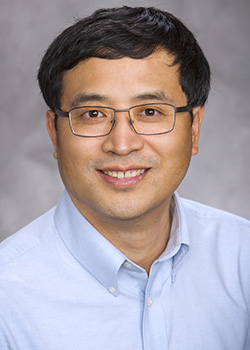
Shaocheng Xie of Lawrence Livermore National Laboratory in California and Peter May of Australia’s Monash University were among 27 researchers recognized as 2026 AMS Fellows.
To receive an AMS fellowship, a researcher must have a record of long-term, sustained, and exceptional contributions to atmospheric, oceanic, or hydrologic sciences; services to the community; and mentoring future scientists. Each year, no more than 0.2% of AMS members may be elected to fellowships.
Xie is known for his contributions to the development and validation of earth system models, the development of simplified model representations of complex cloud and convection processes, and the creation of observational data products for the earth system modeling community.
He is widely recognized as the atmospheric model lead for DOE’s Energy Exascale Earth System Model (E3SM), innovating techniques to evaluate cloud processes and generating modeling data and tools that bridge earth system models and field observations. Over the past decade, he has led the development of the first three generations of the E3SM atmospheric model.
His research on convection onset and its relationship to environmental conditions, using ARM data, has been widely applied in major weather and earth system models to improve precipitation and cloud simulations. He has also pioneered the use of weather forecasting techniques to evaluate cloud-related processes in earth system models.
Xie has led ARM data development for model evaluation over the past two decades. Since 2008, he has been an ARM science translator, serving as a liaison between ARM users and staff while leading the development of value-added products and tools to support cloud and earth system modeling research. From 2019 to 2021, he was ARM’s lead translator, guiding the development of value-added products across ARM’s measurement focus areas. He is also the project leader for the development of the ARM Data-Oriented Metrics and Diagnostics Package (ARM-DIAGS).
For ASR, Xie has led or co-led multiple research projects to assess and enhance model representations of clouds and convection using ARM data.
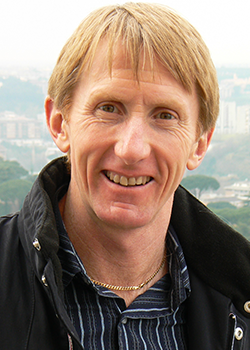
A recognized expert in radar remote sensing and tropical meteorology, with notable contributions to understanding thunderstorms, their vertical circulation, and environmental impacts, May served as the head of research for the Australian Bureau of Meteorology (BOM) from 2009 to 2020.
He is also a Fellow of the Australian Meteorological and Oceanographic Society and former chair of the AMS Committee for Radar Meteorology.
May conducted pioneering dual-polarization radar analyses of tropical cyclones, examining structural changes and rapid variations. He also advanced the use of dual-polarization radar technology in Australia, applying it to measure rainfall quantitatively and study cloud microphysics.
He has been a longtime collaborator with ARM, playing a crucial role in establishing ARM’s Tropical Western Pacific site in Darwin, Australia, which operated from 2002 to 2014.
In 2006, May co-led the Tropical Warm Pool – International Cloud Experiment (TWP-ICE), a campaign conducted in northern Australia by ARM, BOM, and several U.S., Australian, Canadian, and European institutions. This airborne campaign provided valuable insights into tropical cloud processes and contributed to improving earth system modeling.
May was a co-investigator with Xie and other researchers during the 2011–2012 ARM Madden-Julian Oscillation Investigation Experiment-Gan Island (AMIE-GAN) in the Maldives. This campaign focused on gathering critical data to enhance the accuracy of models depicting the initiation and movement of the Madden-Julian Oscillation across the Indian Ocean.
Recently, May served as a co-investigator for ARM’s Cloud And Precipitation Experiment at kennaook (CAPE-k), an 18-month campaign in northwestern Tasmania. CAPE-k collected detailed data sets on Southern Ocean atmospheric phenomena, including seasonal variations and aerosol-cloud interactions with pristine air that crossed the ocean, to advance earth system models.
AMS Editor’s Award

Jim Marquis, an atmospheric scientist at Pacific Northwest National Laboratory in Washington state, received an AMS Editor’s Award for his work supporting Monthly Weather Review.
AMS recognizes individuals who provide exceptional service to its journals by acting as peer reviewers. This service includes delivering thorough, constructive, and prompt reviews; evaluating challenging or complex submissions; offering editors valuable advice on differing reviews; and resolving disputes between reviewers and authors.
Marquis’ ARM-related work focuses on deep moist convection and cloud initiation using radar and sounding data, as well as cloud-scale models. His work helps improve the representation of clouds and aerosols in earth system models and has drawn heavily from ARM data generated during the 2018–2019 Cloud, Aerosol, and Complex Terrain Interactions (CACTI) campaign in Argentina.
AMS Verner E. Suomi Technology Medal and AGU John Tyndall History of Global Environmental Change Lecture
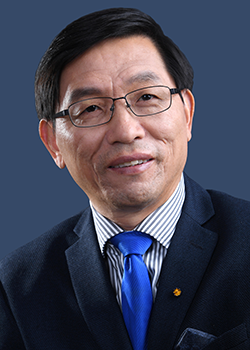
Zhanqing Li, a distinguished university professor in the Department of Atmospheric and Oceanic Science at the University of Maryland, received honors from both AMS and AGU.
AMS recognized Li with the Suomi Medal for his use of remote sensing to measure Earth’s energy budget, his significant contributions to understanding aerosol-cloud interactions, and his development of satellite products for radiation, aerosols, clouds, wildfires, and air pollutants.
AGU’s annual Tyndall lecture honors significant contributions to understanding global environmental change. It is named after 19th-century Irish physicist John Tyndall, whose pioneering research laid the foundation for modern atmospheric science.
Li, an AGU and AMS Fellow, has authored over 400 publications and been cited more than 40,000 times. His career includes a long history of engagement with ARM, starting in 1995, including leadership of a 2008 ARM mobile deployment in China and collaborations related to ARM campaigns in the Southern Ocean and Brazil.
His ASR-supported work spans a broad range of topics related to aerosols, clouds, precipitation, radiative transfer, and planetary boundary-layer processes, as well as the interactions and impacts of these processes on cloud development and earth system processes.
AGU Fellowship

Jiwen Fan was among 65 researchers named as a 2025 AGU Fellow. At Argonne National Laboratory in Illinois, Fan is deputy director of the Environmental Science Division and an Argonne Distinguished Fellow.
Every year, AGU selects no more than 0.1% of its members for fellowships, honoring individuals who have made exceptional contributions to earth and space science through breakthroughs, discoveries, or innovations in their fields.
Fan was recognized for her leading research on aerosol-cloud interactions, severe storms, and advanced earth system modeling. Her work—much of it leveraging ARM data—has significantly improved the fundamental understanding of how different kinds of aerosols influence cloud formation, precipitation, and extreme weather events. As a co-principal investigator for the DOE-funded A Framework for Improving Analysis and Modeling of Earth System and Intersectoral Dynamics at Regional Scales (HyperFACETS) project, Fan has helped deepen understanding of how urban land use influences extreme precipitation patterns around cities and how well models represent the extreme impacts of derechos (widespread, long-lived wind storms associated with bands of rapidly moving showers or thunderstorms).
In 2017, Fan received a DOE Early Career Research Program award to study how environmental changes such as urbanization, wildfires, and rising temperatures modulate severe convective storms. Other professional honors for Fan include a 2015 AGU Atmospheric Sciences Ascent Award, recognizing exceptional midcareer scientists, and a 2023 AMS fellowship.
She has served on ARM’s User Executive Committee, participated in ARM workshops, and been a co-investigator for five ARM field campaigns, including the 2021–2023 Surface Atmosphere Integrated Field Laboratory (SAIL) campaign in Colorado and the 2021–2022 TRacking Aerosol Convection interactions ExpeRiment (TRACER) in Texas.
Fan has also led several ASR research projects and various initiatives using remote sensing and in situ observations to develop and evaluate improved representations of convection and clouds in E3SM, and to develop and enhance the representation of cloud microphysics and aerosol-cloud interactions in the model.
Nominate Your Colleagues
AGU nominations for 2026 honors are now open. The nomination deadline for union medals, awards, and prizes is March 2, while nominations for union fellows and section awards and lectures are due March 13. The 2026 AGU Annual Meeting is scheduled for December 7 to 11 in San Francisco, California.
AMS, meanwhile, is accepting nominations for awards, lectureships, and fellowships until May 1. Nominations for named symposia are due May 8. These honors will be presented at the 107th AMS Annual Meeting, which is scheduled for January 10 to 14, 2027, in Denver, Colorado.
Author: Mike Wasem, Staff Writer, Pacific Northwest National Laboratory
# # #ARM is a DOE Office of Science user facility operated by nine DOE national laboratories.

Follow Us:






Keep up with the Atmospheric Observer
Updates on ARM news, events, and opportunities delivered to your inbox
ARM User Profile
ARM welcomes users from all institutions and nations. A free ARM user account is needed to access ARM data.