An official website of the United States government





ARM Seeks Lead Mentor for Aerosol Precursor Measurements
Published: 18 May 2026
The U.S. Department of Energy’s Atmospheric Radiation Measurement (ARM) User Facility is seeking an instrument lead mentor (technical lead) for ground-based aerosol precursor measurements deployed as part of ARM’s Aerosol Observing Systems (AOS).
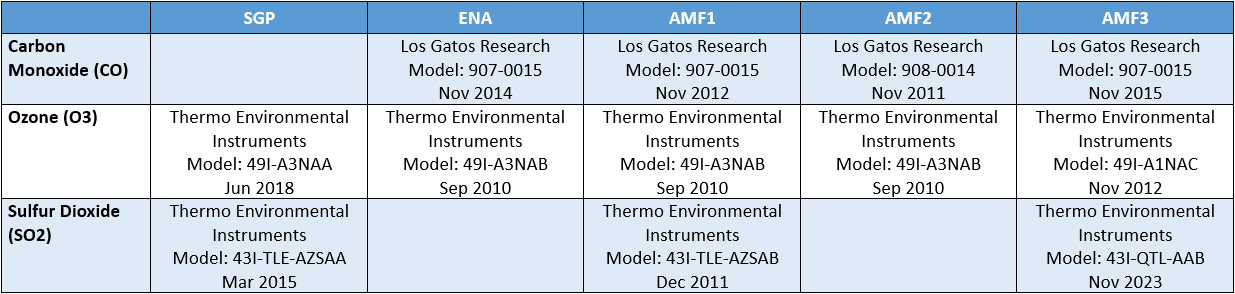
ARM operates a suite of aerosol precursor instruments across five observatories: Southern Great Plains (SGP), Eastern North Atlantic (ENA), and all three ARM Mobile Facilities (AMF1/AMF2/AMF3). As noted in the table below, these measurements include carbon monoxide (CO), ozone (O3), and sulfur dioxide (SO2).
ARM is also reviewing the addition of nitrogen oxide (NOx) measurements to the suite of aerosol precursor instrumentation, and it is anticipated that management of these measurements will be included in this mentorship call.
(Note: The call does not include aerial-based measurements.)
Roles and Responsibilities
The successful candidate shall follow all lead mentor roles and responsibilities defined in ARM’s documents for mentors from universities or national laboratories. These include but are not limited to:
- reviewing all instrumentation and processes with the existing mentor team to ensure a smooth transition
- developing a plan for advancing ARM’s aerosol precursor measurements based on feedback from ARM’s aerosol measurement science constituent group and the broader scientific community
- developing technical specifications for the procurement of new instrumentation
- preparing and testing systems for deployment
- coordinating with the lead AOS mentor team on proposed changes/modifications to the hardware and software associated with aerosol precursor measurements
- manage the ongoing operation, calibration, and data quality assessment of the aerosol precursor measurements.
As noted in point 2 in the list above, the new mentor(s) will be expected to develop a plan for the future of ARM’s aerosol precursor measurements. This plan is expected to include the continued operation of many current ARM aerosol precursor instruments but may include updating processes, improving calibration methods, and procuring new instruments. The plan can include the deployment of additional measurements such as CO at the SGP and NOx more broadly in ARM using commercially available, field-ready systems.
In addition, it is anticipated that the mentor(s) will review industry standards for these measurements, such as recent Environmental Protection Agency approvals for the implementation of Nafion dryers for O3 measurements, as well as develop calibration standards and processes traceable to industry standards.
Application Process and Deadline
To apply for this position, prospective candidates should provide a technical proposal for how they will carry out the functions described above and an accompanying cost proposal. Proposals should also include a description of appropriate experience with these instrumentation and/or measurements (CO, O3, SO2, NOx) and a CV for every member of the proposed team.
For this proposal, candidates should also describe their plan to implement NOx measurements in ARM, starting with the AMF3 deployment to Alabama’s Bankhead National Forest and expanding to other AMF deployments in the future as appropriate, in addition to any modifications they would propose making to existing measurements.
By the application deadline of Monday, June 15, 2026, all interested candidates should email ARM Instrument Operations Manager Adam Theisen with their proposal package and include the following:
- technical proposal
- cost proposal
- plan to implement NOx measurements in ARM
- proposed modifications to existing measurements
- description of instrument and/or measurement experience
- CVs of all team members.
The anticipated start date of the mentorship will be as soon as contracts can be set up (August-September 2026).

Follow Us:






Keep up with the Atmospheric Observer
Updates on ARM news, events, and opportunities delivered to your inbox
ARM User Profile
ARM welcomes users from all institutions and nations. A free ARM user account is needed to access ARM data.