An official website of the United States government





New ARM Plans Detail FY2026 Priorities for Radars and Aerosol Instruments
Published: 26 January 2026
Documents also highlight ARM’s progress in previous fiscal year
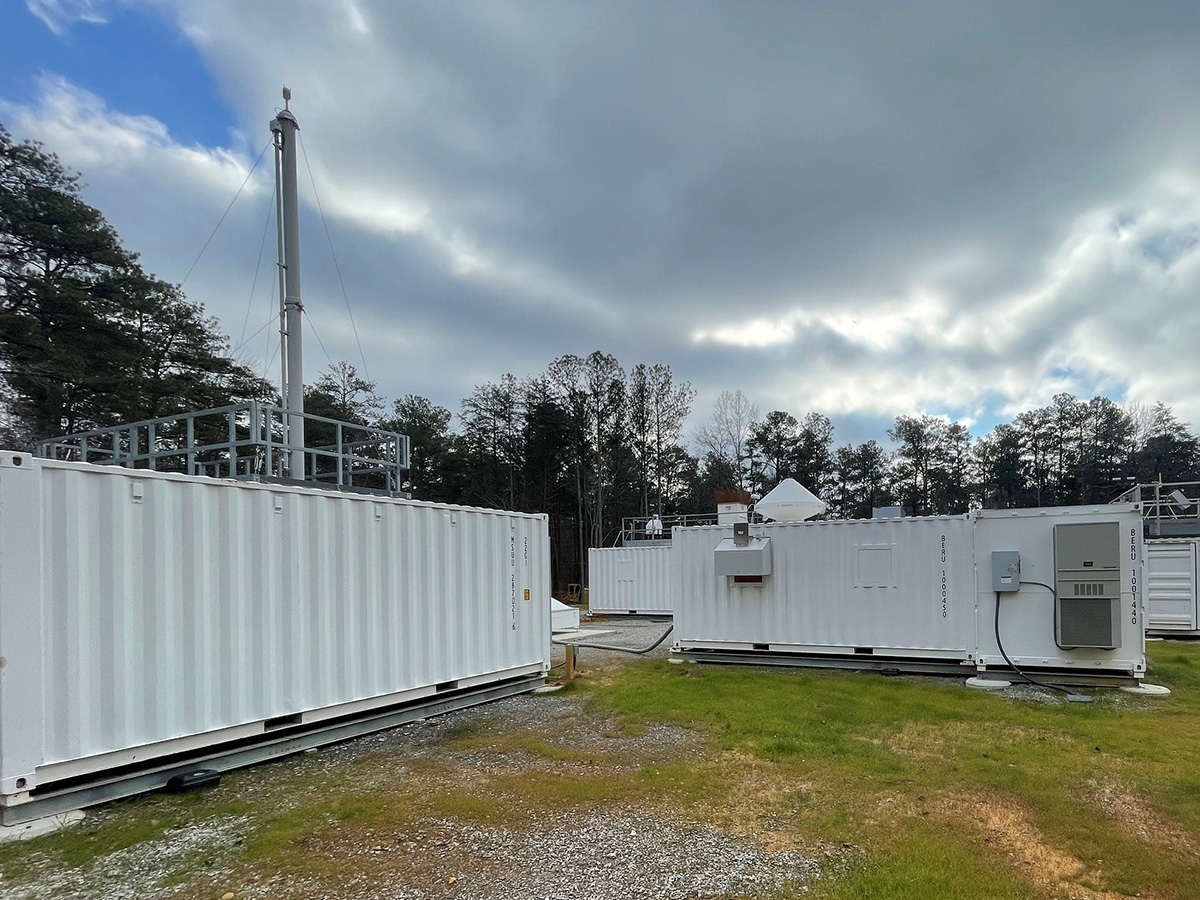
The Atmospheric Radiation Measurement (ARM) User Facility regularly evaluates its activities to ensure staff are putting their time and effort into tasks that provide the highest scientific value for users within budget and staffing constraints.
A pair of fiscal year 2026 (FY2026) planning documents describe progress and priorities related to ARM’s radars and aerosol instruments. These instrument suites are critical tools in ARM’s mission to improve the understanding and representation of cloud, aerosol, and precipitation processes in earth system models in support of the U.S. Department of Energy’s science, energy, and national security missions.
“We started with the plans due to community feedback and requests for more information about these systems,” says ARM Instrument Operations Manager Adam Theisen. “In the end, though, these are some of the most complex and costly systems that ARM operates, and it’s vital that we maximize their benefit to the user community.”
Radar Plan
The FY2026 radar plan has 19 authors, including Theisen and members of ARM’s radar data and engineering mentor teams.
In FY2026, ARM continues to manage its radar portfolio with an eye on balancing scientific impact, operational feasibility, and long-term sustainability. ARM currently has 15 radars, including two pairs of dual-frequency radars, distributed across its three fixed-location atmospheric observatories and three mobile facilities. Four additional pairs of dual-frequency radars are available as spares if needed for a deployment. One of those pairs had been deployed at ARM’s North Slope of Alaska atmospheric observatory and is slated to return there in the summer.
The FY2026 plan also reflects ARM’s ongoing commitment to providing calibrated, well-documented radar data products that enable process-level studies and support the development and evaluation of weather and earth system models.
Along with outlining the radar team’s FY2026 priorities, including support of ongoing operations and an upcoming field campaign in Arizona, the document highlights ARM’s FY2025 progress in radar operations, data quality, and product development.
Following the FY2025 radar plan, the radar team maintained operations at ARM’s fixed observatories and a mobile site in Tasmania. At the same time, the team oversaw new radar deployments in Alabama and Maryland while conducting calibration activities to ensure the delivery of high-quality data.
ARM released several cloud and precipitation radar value-added products (VAPs) from the Bankhead National Forest (BNF) atmospheric observatory, which opened in October 2024 in northern Alabama. In addition, radar data staff released the first set of characterized and corrected b1-level radar data from ARM’s fixed observatories. Data at the b1 level have a higher level of processing than a1-level data, including application of calibration factors. BNF b1-level radar data will be made available to ARM users in FY2026.
You may contact Theisen with questions or feedback on the FY2026 radar plan.
Aerosol Operations Plan
Dig deeper into ARM’s latest plans: Find the fiscal year 2026 aerosol operations and radar plans in ARM’s publications database.
The FY2026 aerosol operations plan features contributions from 18 authors, including ARM lead aerosol mentor Olga Mayol-Bracero, additional aerosol instrument mentors, ARM aerosol science translator John Shilling, and Theisen.
ARM currently deploys five ground-based Aerosol Observing Systems (AOS), each containing about a dozen instruments. In addition, ARM has a set of three aerosol instruments operating in northern Alaska to monitor aerosol chemical composition and particle size. Measurements from these instruments complement long-term NOAA data.
The plan describes ARM’s FY2026 priorities for AOS operations, calibration, engineering and development, and data products. A major component of FY2026 is sustaining routine AOS operations, maintaining data continuity across sites, and ensuring long-term measurement stability, which are core goals of ARM aerosol operations, says Mayol-Bracero.
ARM staff have deployed a mini-AOS at the BNF. The system is currently located at the main site for comparison with the AOS. It will be moved to one of the supplemental sites later this year. AOS staff are also implementing gold-standard calibration equipment and processes for ARM aerosol instruments to be traceable to world reference standards. In addition, members of ARM’s translator team are working to process aerosol VAPs from new campaigns while updating existing VAPs.
The new document also summarizes outcomes of aerosol activities that were planned for the previous fiscal year.
At the time of publication, ARM had completed nine engineering and development activities from the FY2025 aerosol operations plan, was in progress on nine, and had put two on hold. The completed activities included a gas analyzer intercomparison, an evaluation of optical particle counter and ultra-high-sensitivity aerosol spectrometer measurements, and a laboratory study that helped ARM advance consistency and standardization across its network of aerosol chemical speciation monitors.
If you have questions or feedback about the FY2026 aerosol plan, please send them to Mayol-Bracero through ARM’s instrument mentor contact page.

Follow Us:






Keep up with the Atmospheric Observer
Updates on ARM news, events, and opportunities delivered to your inbox
ARM User Profile
ARM welcomes users from all institutions and nations. A free ARM user account is needed to access ARM data.